
Travel with your dog on train is often easier than flying because it gives more space and less noise. Trains also let you stay close to your dog, which keeps them calmer during long trips across different parts of India.From getting the class of travel/bookings right to ensuring that your dog will be comfortable and safe, many things to check for. Here is a full, step-by-step guide to travelling by train in India with your dog in an easy‐to‐understand manner.
Table of Contents
1. Why Choose Train Travel with Your Dog in India
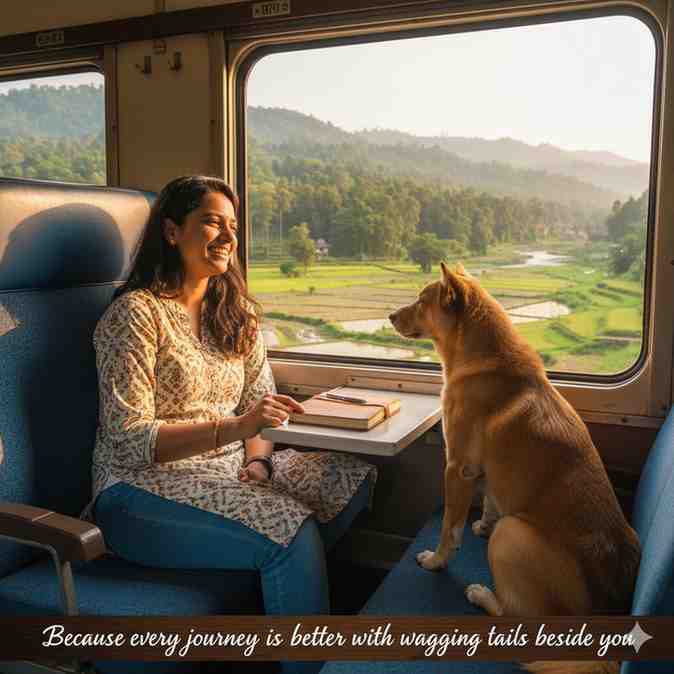
Train travel offers a flexible and often relaxed way to move between cities with your dog. Unlike road travel, you don’t need to drive; unlike flights, you avoid air-cargo stress and much higher costs. The national rail network offers broad reach, making it feasible for many pet‐friendly journeys.
It helps to keep your dog’s routine and to lessen the anxiety of separation when your pet is taken on the trip. However, this runs well only if you are already aware of the rules and the practicalities.
2. Understanding the Railway Policies for Pet Travel
Travel with your dog on train means following Indian Railways rules, including fitness certificates, proper booking and safe placement in allowed coaches. Knowing these policies helps you avoid confusion and keeps the journey smooth for both you and your dog.
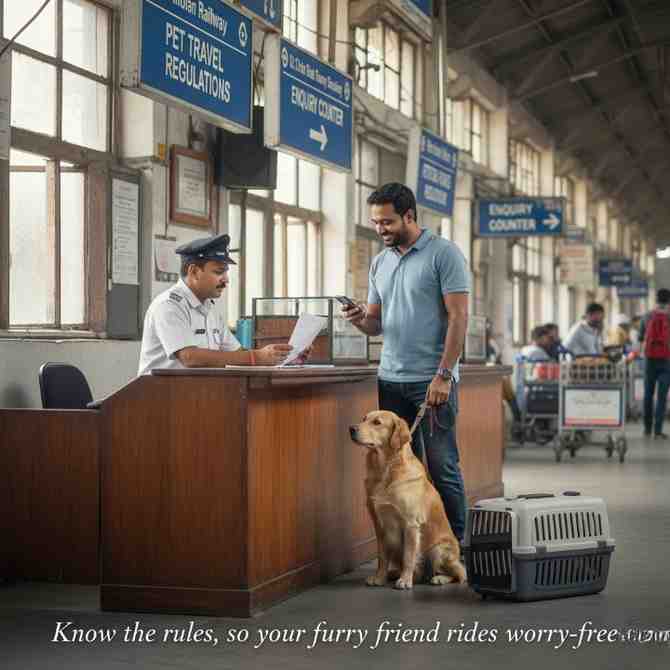
Before you book anything, you need to understand how the Indian Railways allows pets to travel. The rules matter because if you don’t comply, your dog may be excluded from your compartment or moved to a less ideal location.
Dogs and cats (and small pets) are allowed—but only under specific conditions.
If you want your dog to travel with you inside the compartment, you must book an entire coupe (2-berth) or cabin (4-berth) in First Class/AC First.
Alternatively your dog may travel in a luggage/parcel van (dog-box) if you cannot book the cabin. theboholiving.com+1
Only one dog per “PNR” (Passenger Name Record) is allowed when the dog travels in the passenger compartment. sr.indianrailways.gov.in+1
Dogs (or pets) are not permitted in many classes, such as AC-2 tier, AC-3 tier, Sleeper, or General, if travelling inside the same compartment.
Knowing these policy basics helps you pick the right booking path and avoid surprises.
3. Eligibility, Restrictions and Important Rules For Pet Travel
Travelling with your dog on train can be a smooth experience when you plan. Keep your dog comfortable, carry the right documents, and choose the coach that fits their needs so the journey stays calm and enjoyable for both of you.
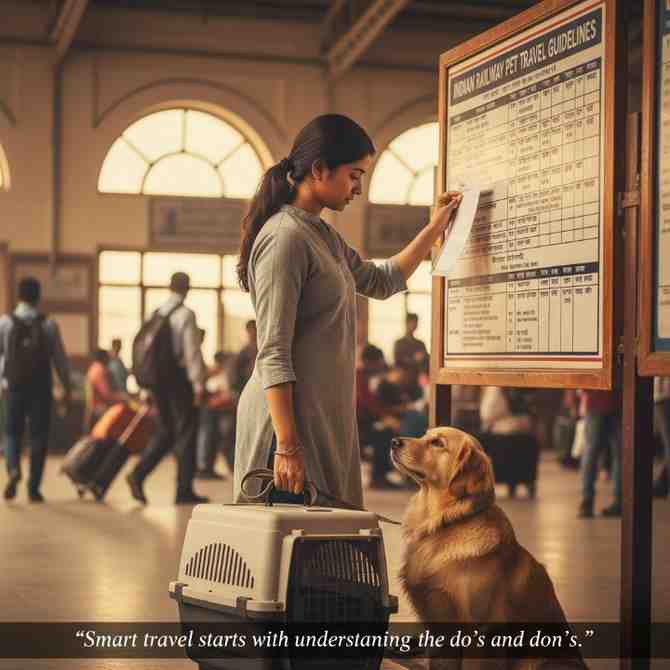
You must hold a confirmed ticket for yourself. The pet travel is only valid when you are a confirmed passenger.
The dog must be healthy, vaccinated, and accompanied by a fitness certificate issued by a veterinarian within the required recent timeframe.
If other passengers in your booked cabin object subsequently to your dog’s presence, the railway reserves the right to shift your dog to the brake van.
If you attempt to carry a dog without following the booking rules, there is a penalty—six times the Scale-L luggage rate or a minimum charge, as per one official note
Choosing the Right Option
Pet train travelling works best when you select an option that suits your dog’s size, comfort needs, and temperament. A calm dog may enjoy staying with you, while others may do better in a supervised compartment.
There are essentially two main options:
1. With you in the cabin or coupe – only if you book the entire space in First/AC First.
2. Dog travels in dog-box/luggage van – you travel separately in any class, dog in the luggage compartment.
4. Booking Options for Your Dog
Travelling with your dog on train begins with choosing the right booking method. You can reserve space in the brake van or book a coupe in First AC on select routes. Early booking helps avoid stress and gives your dog more comfort.
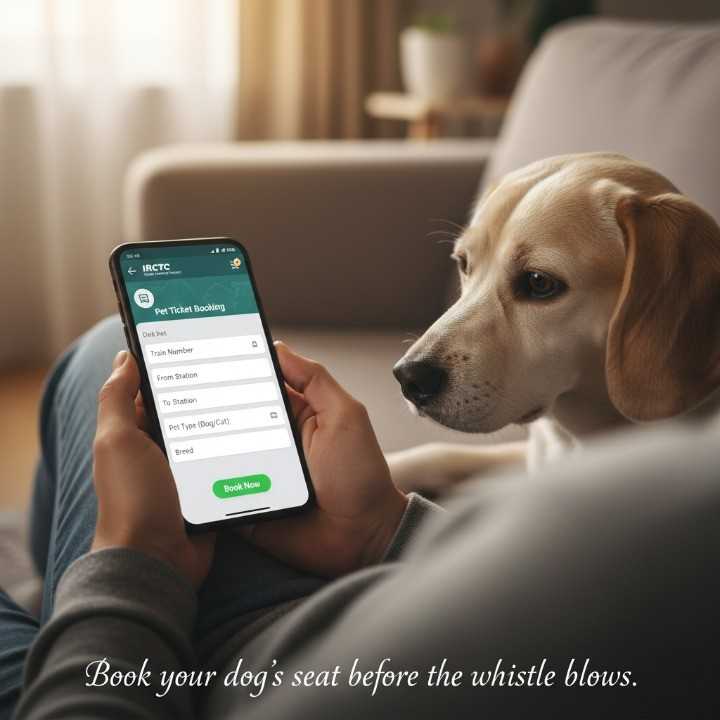
Let’s walk through how you can book your dog’s travel depending on the choice you make.
Option A: Pet Travels With You in Passenger Compartment
Pet train travelling allows your dog to stay close in First AC coupes, giving them comfort and reassurance. This option is ideal for dogs who prefer company and feel safer when they are near their owner.
Book a First Class AC (1A) coupe (2-berth) or cabin (4-berth).
After ticket confirmation, write a request to the relevant reservation office (divisional or GM office) to allot the full cabin or coupe for you + pet.
Bring your dog (with documents) to the parcel/luggage office at least 3 hours before departure from the originating station.
Option B: Pet Travels in Luggage/Brake Van
Pet train travelling in the brake van is suitable for larger dogs or when AC accommodation is unavailable. The space is supervised, but planning ahead ensures your dog stays safe and comfortable during the journey.
If you cannot book the entire coupon/cabin, select this option. Your dog is treated like luggage—booked at the parcel/guard van.
You must arrive at the luggage/parcel office, present your passenger ticket + pet documents, pay luggage rates.
You travel in your ticketed class; your dog is secured in a cage inside the brake van, under supervision of the guard.
Tips for Booking
Pet train travelling becomes easier when you book early, confirm availability in First AC and complete parcel office formalities. Checking coach preference and travel timings in advance helps avoid stress at the last moment.
Book well in advance especially if you require the coupe/cabin option, since only limited 1A coaches exist.
For solo travellers with a dog, it’s sometimes recommended to book two seats to secure a coupe (even if only one human is travelling).
Confirm at the station that your dog’s booking has been processed and that you have a receipt of payment.
5. Pre-Pet Travel Preparation: Health, Documents & Packing
Travelling with your dog on train requires a quick health check, updated vaccination records and a fitness certificate. Pack essentials like water, a light blanket, food and waste bags. Preparing these items ahead of time keeps your dog settled throughout the journey.
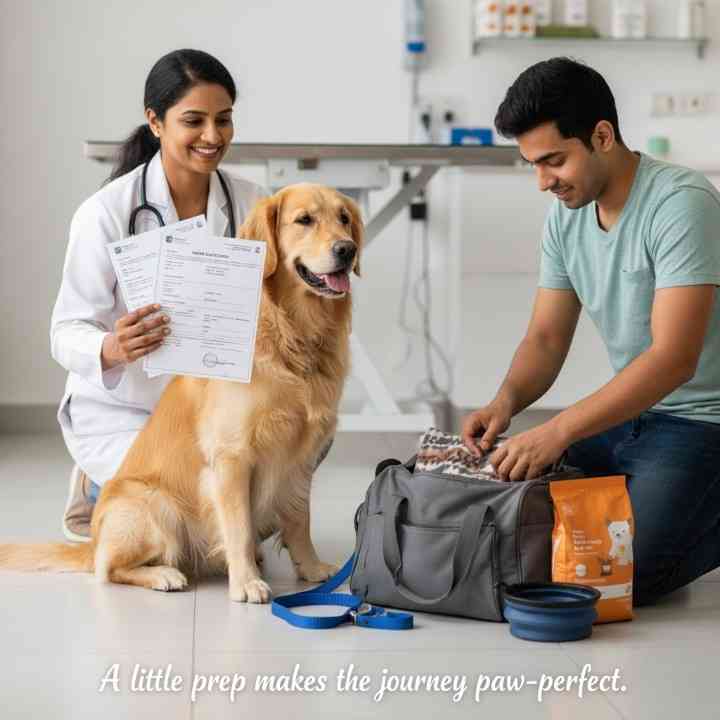
Health & Documents
Pet train travelling requires a recent fitness certificate, updated vaccination records, and basic identification. These documents ensure your dog is healthy and meets railway rules for a smooth and safe journey.
A fitness certificate from a registered veterinarian is mandatory, stating your dog is healthy and free from infectious/contagious diseases, and it should be issued within 24-48 hours before departure.
Ensure vaccinations are up to date (especially rabies or any state specific requirement).
Keep all vaccination records, all vet certificates related to your pet(breed, colour, gender sometimes) required for booking.
Have your own ticket confirmed and your photo ID ready.
Packing Checklist
Pet train travelling is simpler when you carry essentials like water, light food, a mat, waste bags, a leash and a familiar toy. These items help keep your dog settled and comfortable throughout the trip.
Here are items you should pack for your dog
- Leash and collar (with ID tag)
- Comfortable bedding or blanket your dog is used to
- Food and water bowls, sufficient drink and favourite snacks
- Waste bags, cleaning wipes/newspapers (in case of accidents)
- Travel crate/cage (especially if dog will be in luggage van)
- First-aid kit and basic medications your dog may need
- A toy or familiar comfort item to reduce anxiety
- Travel mat or sheet for the berth or cabin floor
Training & Conditioning Your Dog
Pet train travelling goes better when your dog is used to new sounds, short trips and staying calm in enclosed spaces. Gradual conditioning helps reduce anxiety and prepares them for a relaxed journey.
- If your dog is not used to trains, try shorter rides to acclimatize.
- Keep feeding light before travel to reduce chance of motion sickness.
- Make sure your dog sleeps well the night before and is walked before boarding.
6. Choosing the Right Train, Route and Class
Travelling with your dog on train becomes easier when you pick a route with fewer halts and a class that offers space and privacy. First AC coupes or cabins are usually the best choice, helping your dog stay relaxed during long trips.
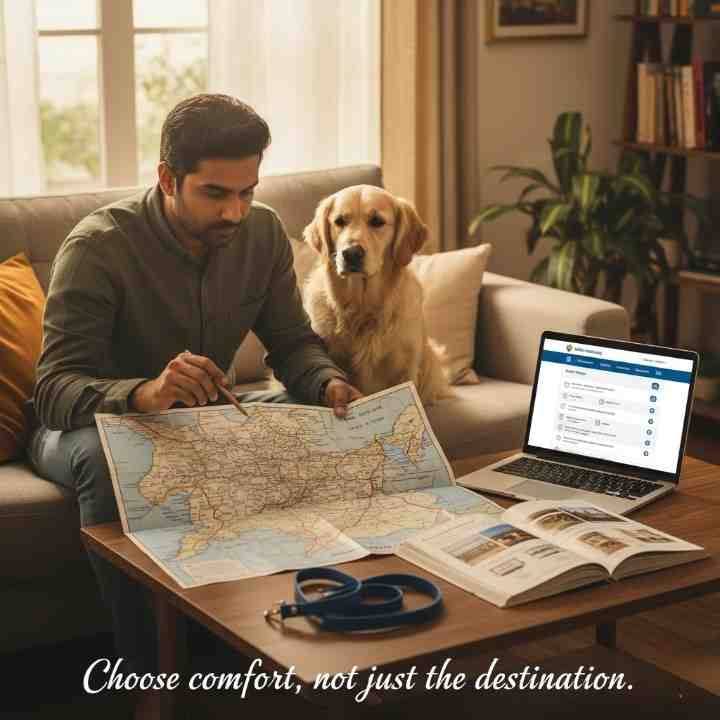
Your choice of train, class and route can influence how comfortable the journey is for both you and your dog.
Selecting the Correct Class
For travelling inside the compartment, only First Class AC / AC First (1A) coupes/cabins qualify. Pets are not permitted in AC 2-tier, AC 3-tier, Sleeper or general classes for in-compartment travel.
If you opt for the luggage van option, your own travel class can be any, but your dog will be separated—so choose favourite class based on your comfort.
Picking the Route & Timing
• Choose a train with minimum stops and comfortable duration. The shorter the trip, generally the less stress for your dog.
• Board at the originating station if possible (so that dog’s booking begins fresh).
• Avoid extremely hot weather or heavy rain periods if possible, especially for larger breeds susceptible to heat.
• If cabin option is used, pick a coupe which is quieter, fewer passengers, better for your dog’s calm.
7. Day of Pet Travel: At the Station & Boarding
Dog travel on train starts smoothly when you reach the station early, complete formalities and let your dog adjust to the surroundings. Calm handling during boarding helps reduce stress and makes the transition into the coach easier.
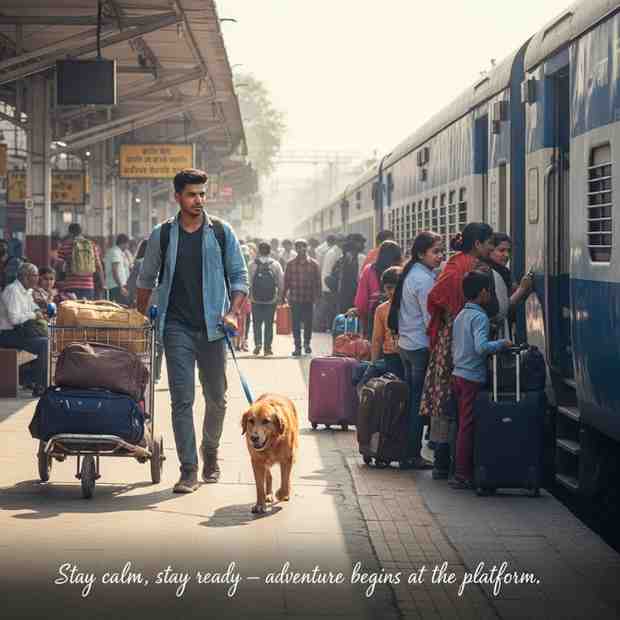
The day you travel is where preparation meets execution.
Arrive Early
Pet travel is smoother when you reach the station ahead of time. Early arrival helps you finish paperwork, avoid crowds and give your dog a few minutes to adjust before boarding.
• Arrive at the station at least 3–4 hours before departure, especially if you have to process the pet booking through the luggage/parcel office.
• Collect all your documents—including the receipt for pet booking, your own tickets, vet certificate, vaccination record.
At the Station
• Go to the parcel or luggage office (depending on your chosen mode) to register your dog, pay charges and collect the receipt.
• Ensure your dog is securely leashed or in carry basket (for small puppies) or crate (if going via brake van).
• If in cabin, board the train and settle in. If dog travels in brake van, you may not board that compartment but you can visit during halts (subject to guard permissions)
Settling In
• In cabin: Spread a blanket or mat your dog is comfortable with. Offer water but not heavy food right away.
In brake van: Confirm the location of the dog box, see if a water bowl is provided (you may need to bring your own), check that the dog is safe and comfortable
8. During the Journey: Comfort, Safety and Etiquette
Dog travel on train should focus on keeping your dog relaxed with familiar bedding, water, and short breaks when possible. Follow basic etiquette to ensure your dog remains calm, safe, and comfortable throughout the journey

Once you’re on board, your main objective is to keep your dog calm, comfortable and safe.
Comfort & Safety
Monitor your dog’s behaviour. If he seems anxious, offer a chew toy or comfort item.
• Walk and stretch your dog during station halts if possible (especially for longer journeys). • Ensure your dog does not obstruct aisles or disturb other passengers.
Put down newspapers or mats as a protective layer on the floor by the side of the berth to catch mistakes. Show your pet where its bedding is and let it lie down there.
Keep the cabin well-ventilated (but not drafty), maintain water supply, avoid giving too much food until later.
• If your dog is in the brake van, check in with the guard at halts if permitted, and ensure drinks are refreshed.
Etiquette with Other Passengers
Dog travel on train requires you to be mindful of fellow passengers. Keep your dog close, avoid unnecessary noise and maintain cleanliness. A polite approach makes the experience pleasant for everyone sharing the space.
- Let other passengers know you have a dog travelling with you. This helps with goodwill.
- Keep the dog leashed (or contained) when moving in the coach or platform.
- Clean up any accidental mess immediately.
- Respect other passengers’ space. If your dog becomes restless or noisy, it might be safer to move it to the bike/guard van option (if possible) or exit at the next station.
9. Arrival & Post-Pet Travel Care
Dog travel on train ends well when you check your dog for signs of stress, offer water and allow time to stretch. A short walk and calm reassurance help your dog recover quickly after reaching the final destination.
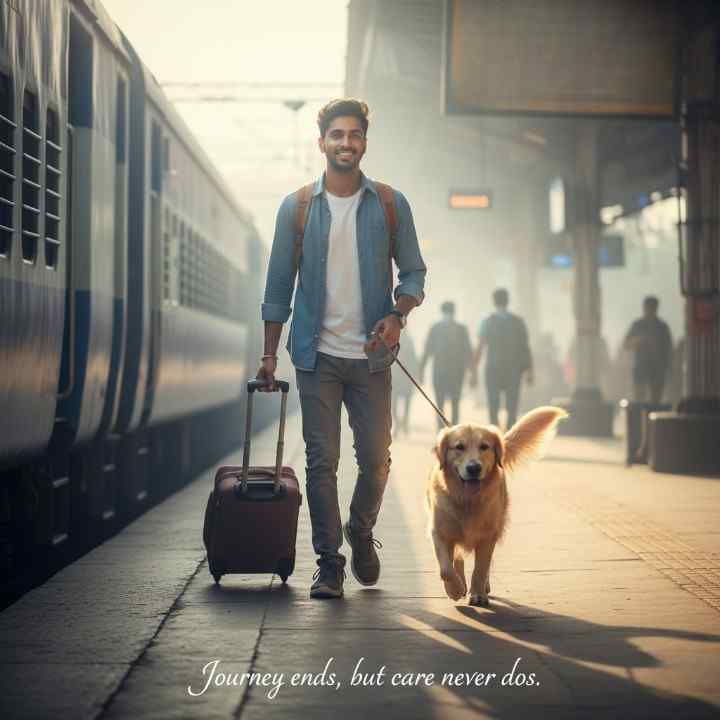
On Arrival
- Collect your dog from the coach or the brake van, as applicable. If in the brake van, present your receipt to the guard.
- Give your dog a good walk, fresh water, a bath if possible, and a light meal.
- Check your dog for signs of stress: panting, trembling, decreased appetite. Offer calm reassurance.
If you travelled a long distance, let your dog rest and recover before a busy schedule
After the Journey
Dog travel on train should end with a quick health check, hydration and a chance to relax. Giving your dog a short walk and some quiet time helps them recover from the trip and settle into the new environment.
- Clean any bedding or mats used.
- Review the travel log: what worked, what didn’t, and make notes for future journeys.
- If your dog had any motion issues, consult your vet before the next time.
10. Costs & Charges for Travelling with Dogs
Dog travel on train comes with fees based on your dog’s size and the class you choose. Charges are usually paid at the parcel office, and planning ahead helps you avoid last-minute delays or unexpected expenses.
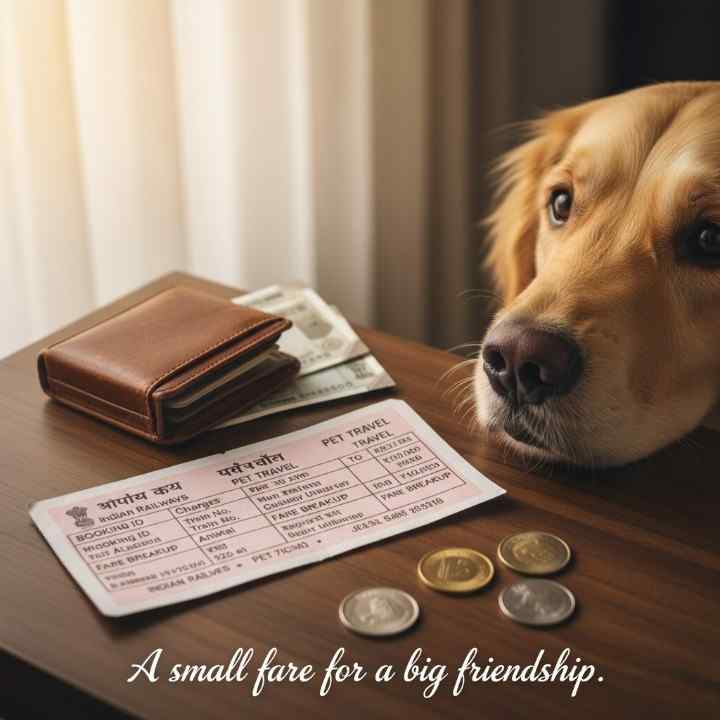
Understanding cost will help you budget and avoid surprises.
- When dogs travel in cabin/co-passenger mode, you’ll pay the ordinary fare for you + a “luggage” charge for the dog as per rail rules. sr.indianrailways.gov.in+1
- In the luggage/van mode, the dog is treated as luggage and charged according to weight and distance (for example ~₹30 minimum or six times the Scale-L luggage rate if rules are violated) Indian Railways+1
- Additional costs: vet certificate, vaccination updates, extra supplies (crate, travel bedding, etc.).
- Some trains may have limited dog-box availability; if you book early you avoid extra wait or denial.
11. Safety and Comfort Tips for a Successful Journey
Dog travel on train stays pleasant when you carry clean bedding, light food, water and identification tags. Keeping your dog close, calm and supervised ensures a safe and comfortable ride from start to finish.
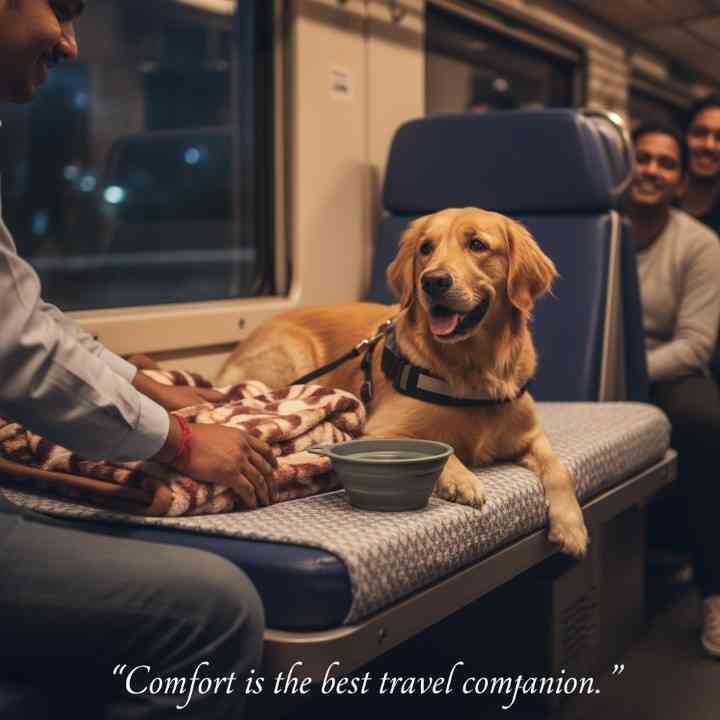
Do
Dog travel on train goes better when you follow rules, maintain hygiene, carry required documents and keep your dog well-behaved. Small steps like offering water and reassurance help your dog stay relaxed during the journey.
- Try to adjust/acclimatize your dog to a crate or carrier well before the journey.
- Travel outside peak heat/adverse weather hours when possible.
- Always try to choose a berth or cabin that allows your dog to lie down comfortably.
- Bring favourite toys or blankets.
- Regular monitor your dog’s hydration and comfort continuously.
Do Not
Dog travel on train should avoid overcrowding, loud reactions or forcing interaction with strangers. Don’t let your dog roam freely or cause disturbance. Staying mindful ensures a smooth experience for you and other passengers.
- Do not sedate your dog without veterinary advice. It may create trouble for you.
- Do not board without completing the pet booking formalities.
- Do not assume all classes allow dogs—most do not.
- Do not leave a large dog unattended in a general coach.
- Do not skip vet certificate or proper documentation
12. Legal and Ethical Considerations
Dog travel on train requires respecting railway laws, following booking rules and ensuring your dog’s welfare. Ethical handling means keeping them safe, comfortable and never putting them in a situation that causes distress or harm.
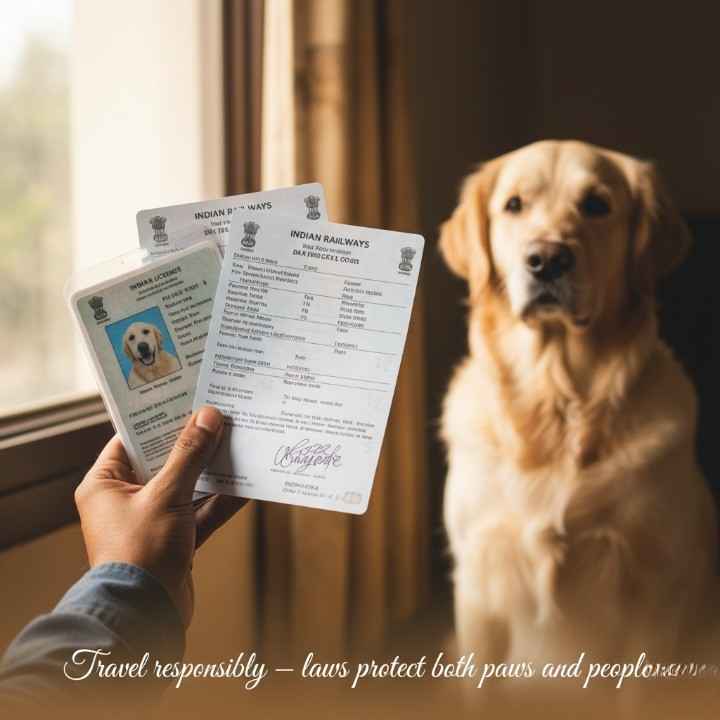
As a pet-owner you carry the responsibility for your dog’s welfare and for co-passengers.
- You are responsible for your dog’s behaviour and cleanliness. If your dog causes disturbance, the guard or TTE may move it to the brake van without refund. sr.indianrailways.gov.in
- Avoid taking exotic or wild animals under “pet” booking—railway rules restrict to domestic pets. railministry.com
- Always ensure that your dog is feeling comfortable, not stressed, that you have considered its welfare for the journey duration.
- Respect fellow passengers’ rights—Always keep your dog leashed, avoid blocking aisles, and respond promptly to issues.
13. Common Mistakes to Avoid While Travelling With Dog
Dog travel on train becomes stressful when owners forget documents, pack poorly or ignore comfort needs. Avoid last-minute bookings, skipping health checks or placing your dog in unsuitable compartments that may cause unnecessary anxiety.
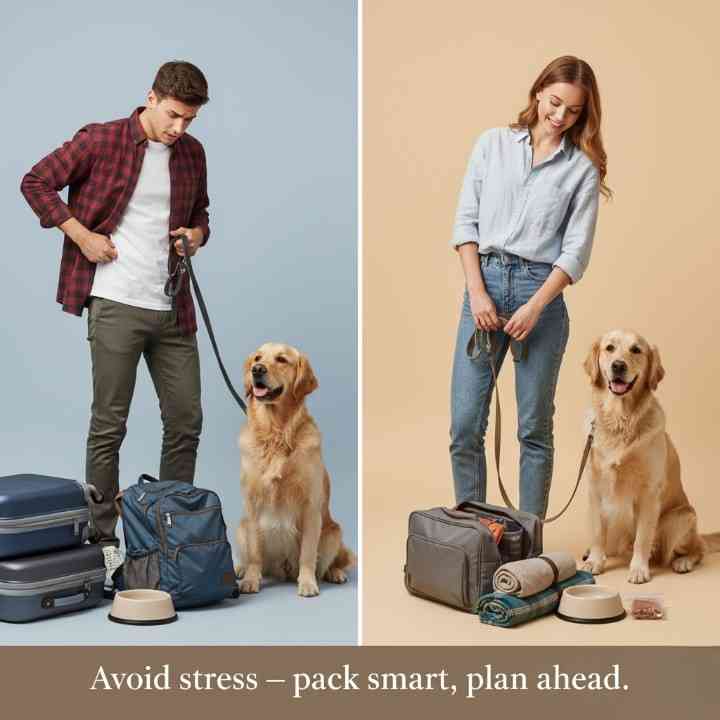
Here are frequent pitfalls pet-owners encounter, and how you can avoid them:
- Booking the wrong class: Many assume any class works for pet travel—but only First/AC First cabin/coupe for in-compartment travel.
- Arriving last-minute: Pet bookings require early arrival to parcel/luggage office.
- Underestimating the paperwork: Missing vet certificate or valid vaccination records may result in denial.
- Overfeeding or ignoring anxiety: Dogs may get upset in motion; feed light and remain attentive.
- Assuming infinite dog-box availability: Brake van spaces are limited and often first-come first-served.
14. Alternatives to Train Travel with Your Dog
Dog travel on train is convenient, but alternatives like car trips, pet-friendly buses or short flights may fit better for certain routes. Choosing the right mode depends on your dog’s age, health and comfort level.
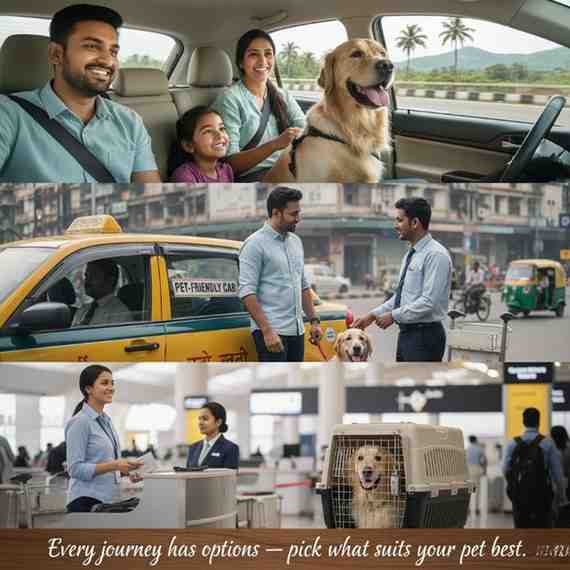
While train travel is often ideal, sometimes another mode might suit better:
- Road travel: Offers maximum flexibility, frequent stops, direct access if you drive.
- Air travel: Faster but costlier and may require special cargo conditions or airline permission.
- Pet-transport services: Some providers are specialised in moving pets and might handle the logistics if you cannot travel together.
Each option has pros and cons, so choose based on your dog’s size, temperament, route distance, and comfort
15. Real Experiences From Dog-Travellers
Dog travel on train has inspired many owners to share helpful tips about choosing the right coach, preparing early and keeping dogs calm. These real stories highlight what works well and what to expect during the journey.
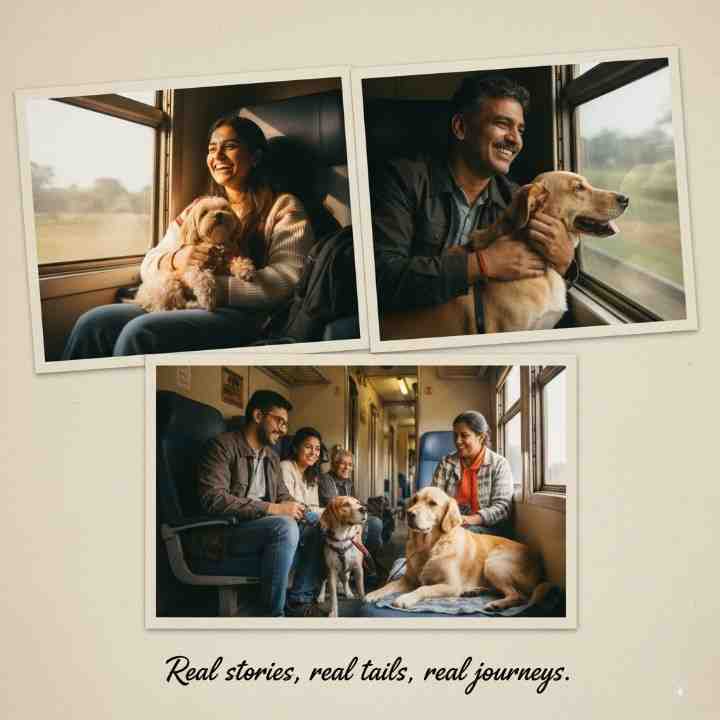
Hearing from other pet-parents can help you anticipate real-world scenarios:
“If anyone in your coupe objects to the pet being around, the TC can ask you move the pet.” Reddit
“We booked the luggage route for our dog when the cabin wasn’t available; it worked, but you have to accept the dog will travel separately.” theboholiving.com Key lessons: Book early, always carry documents, make your dog comfortable in a crate before the actual trip, and treat the train journey as part of your pet’s routine rather than a disruptio
Summary-Pet Travel With Happy Journey
Dog travel on train can be smooth when you plan ahead, follow rules and prioritise comfort. Preparing documents, choosing the right class and carrying essentials helps your dog enjoy a safe and relaxed travel experience.
Indian trains allow travelling with pets and at the same time promote it. It is not only possible to travel by train with your pet but also very pleasant and an unforgettable experience for the animal. The key points are: familiarize yourself with Indian Railways rules, make a suitable reservation (cabin/co-passenger or dog in the luggage van), obtain health certifications for your dog, and ensure comfort and good behavior during the trip.
FAQs
Can dogs travel on trains in India?
Yes. Indian Railways allows dogs on trains under specific rules. You can book them in first class or in the brake van depending on your choice.
Do I need a ticket for my dog?
Yes. Dogs require a paid ticket. Charges depend on luggage rates set by Indian Railways.
Can my dog stay with me in the compartment?
Only in first class AC or first class cabins, and you must book the entire cabin to avoid complaints from co-passengers.
What documents are required for dog travel?
You need a valid vaccination record and a fit-to-travel certificate from a veterinarian before travelling with your dog.
How early should I arrive at the station?
For travelling with your dog on train, you should arrive at least an hour early to complete ticketing, verification, and settle your dog before boarding.
Can puppies travel on trains?
Yes, as long as they are healthy and have basic vet clearance. Young puppies need extra care and comfort.
Is food provided for dogs on trains?
No. You need to carry your dog’s food, water, bowls and basic supplies.
What if my dog gets anxious during travel?
Carry familiar items like a blanket or toy. Keep calm, offer comfort and avoid overcrowded spots.
Are large dogs allowed on trains?
Yes. Size is not restricted, but large dogs usually travel in the brake van unless you book a full first class cabin.
What should I do after reaching the destination?
Give your dog water, a short walk and time to stretch and relax before moving on.

I was in search of this types of information..thanks for sharing
This is very helpful information, thank you so much for spreading it. It will help us a lot.