Is your pet getting the nutrition that it is worth? While dry food is easy, meals that are fit for human consumption can contribute significantly to your pet’s health such as its energy, skin, and coat quality. Loaded with nutrients and without any fillers, these foods may become a source of energy, heat their bodies with good fats, and even regulate their digestion.
Are you prepared to make the change? Find out how fresh food can transform their life!!
Table of Contents
Why the Right Diet Matters for Your Pet

Choosing the right food for a pet is no longer as simple as picking up a bag from the nearest store. Today’s pet owners are more informed, more involved, and increasingly aware that nutrition plays a direct role in longevity, comfort, and quality of life.
Many pet owners struggle when it comes to feeding pets is deciding between dried food and fresh pet food. Kibble has been the default option for a long time, but now, human-grade dog food is gaining more and more popularity because it is more health, promoting and provides a significantly more beneficial nutritional value, which may result in the health of your pet being improved. Yet, what makes these fresh meals so unique, and what is their comparison to the conventional kibble?
For owners of specific breeds like European Doberman Pinscher puppies, choosing the right food becomes even more crucial. In this article, we explore the quality of fresh pet food and kibble, reveal the advantages of feeding your pet human-quality food, and provide information on how a proper diet can actually improve their health.
Fresh Dog Food vs Kibble: Understanding Basic Pet Nutrition
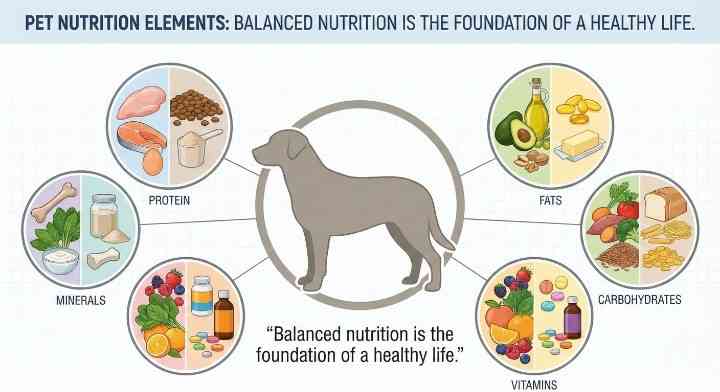
Knowing what makes a balanced diet for pets is a question that needs to be answered first before we can get into the discussion of fresh pet food versus kibble. Cats and dogs are meat, eaters, and their nutritional needs are very specific. A balanced diet for pets normally contains protein, fats, carbohydrates, vitamins, and minerals and each nutrient is like a small doctor that keeps the health of pets in good condition.
“Research from the University of Illinois suggests that while kibble meets basic nutritional needs, fresh, human-grade meals often provide superior digestibility. These meals allow your pet’s body to absorb and use nutrients more effectively, offering improved bioavailability compared to traditional dry food.“
The nutritional requirements can differ significantly, but kibble manufacturers typically claim that their products meet all these requirements. Conversely, fresh pet food choices, particularly human-grade food, have the advantage of being made with fresh, whole ingredients that contain no preservatives or fillers, unlike those found in kibble.
Fresh Pet Food: The Emergence of Human-Grade Pet Food
What Are Human-Grade Meals?
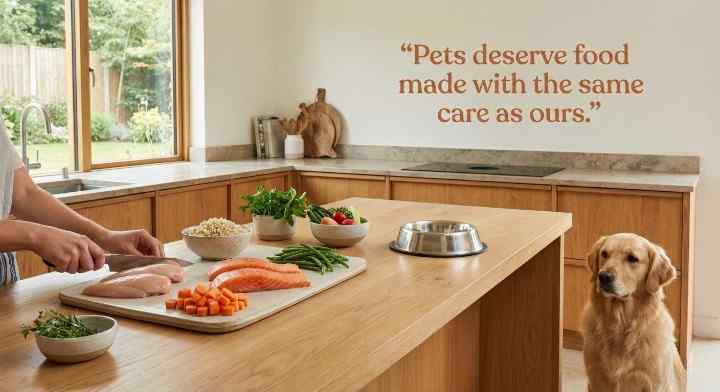
Human, grade meals are exactly what they say: food that is of the same quality as the food that people consume. Unlike regular pet food, which can be made of quite questionable ingredients, such as by, products, fillers, and preservatives, human, grade meals are made of fresh, whole foods that come from vendors that also supply food for human consumption.
Such meals are created taking into account the nutritional needs of pets and are often without any kind of artificial additives and low, quality fillers. The trend of human, grade meals is spreading very fast as pet owners continue to get more and more informed about the nutritional value of their pets’ food.
Why Human-Grade Meals Are Gaining Popularity
Human, grade meals are becoming more popular due to the higher awareness of pet owners about what they feed their pets. With the recognition of the importance of quality nutrition for pets, the trend is to turn to fresh petfood that gives a higher chance to control the quality and origin of the ingredients.
Moreover, human, grade meals provide a more natural diet, which is complete in protein, good fats, and essential nutrients and may have a great impact on your pet’s health. A great number of studies confirm that pets on a fresh food diet and a protein, rich diet show better skin and coat conditions, and also, have more energy.
Kibble: Best Choice of the Traditional Pet Owner
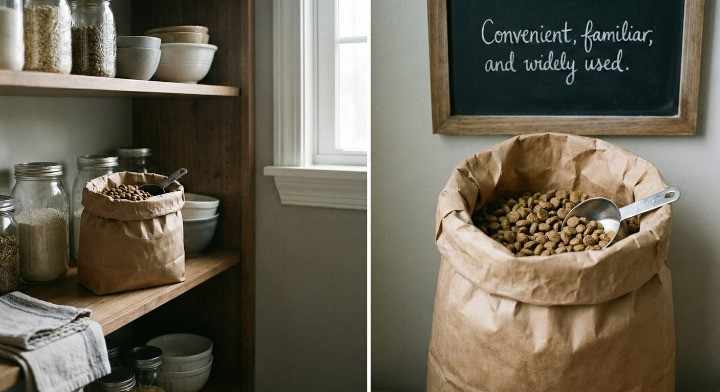
• What’s in Kibble?
Kibble has been the most preferred option for many pet owners because it is convenient and relatively cheaper. It is a packaged and dry food product composed of meat, grains, vegetables, and other ingredients. The ingredients are also typically cooked at high temperatures, which may destroy some of the natural nutrients found in the raw ingredients.
Numerous brands of kibble include artificial preservatives, flavors, and colors to increase the interest of their products. Although kibble may provide a balanced diet, it is essential to remember that not all kibble is equal, and the quality of the food can vary significantly depending on the brand.
✓ Pros and Cons of Kibble
It is a fact that kibble is convenient – the food is easy to store, simple to serve, and, in most cases, more affordable than fresh food choices. It is also designed to meet the nutritional needs of pets, making it a suitable choice for busy pet owners.
The negative aspect, however, is the production of ingredients and the potential loss of nutrients due to high-temperature heating. Some kibble brands contain preservatives and other artificial additives, which also have adverse consequences on the health of your pet in the long run.
How Fresh Pet Food Can Boost Your Pet’s Health: The Transformative Effect
From a veterinary perspective, nutrition plays a foundational role in a pet’s long-term health. While both kibble and fresh diets can meet basic nutritional requirements when properly formulated, clinical observations increasingly suggest that fresh, human-grade diets may offer specific health advantages for certain pets, particularly those with digestive sensitivity, skin disorders, or weight-management challenges.
•Improved Digestive Tolerance and Nutrient Absorption
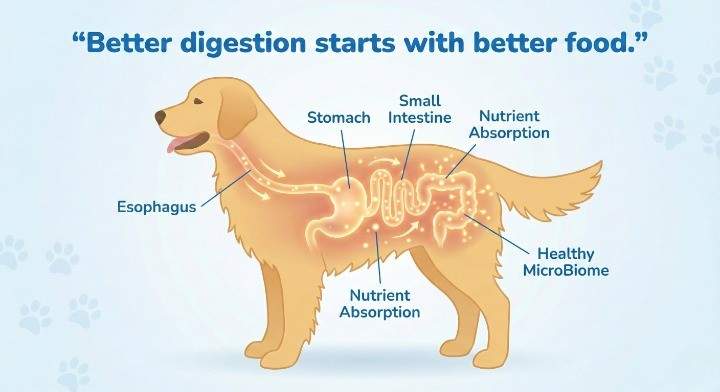
As a matter of fact, pets that receive a diet consisting of minimally processed fresh foods are usually found to have better stool quality, less gas production, and infrequent intestinal upsets. Fresh pet foods are generally less filled and are less heated processed, thus they retain the naturally occurring enzymes and amino acids. All these can significantly improve nutrient bioavailability thus the body can absorb and use the nutrients in a more efficient way.
This advantage, in particular, is very important for puppies, elderly animals, and the breeds that are highly susceptible to the digestive system where it is absolutely necessary for the growth and the repair of the tissues to get the proper nutrient absorption.
• Skin and Coat Health: A Visible Indicator
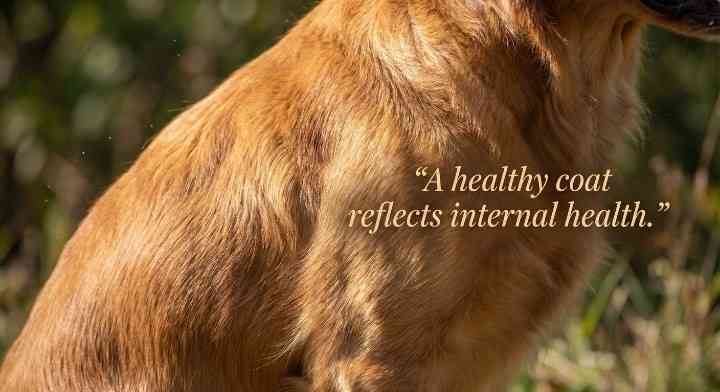
Coat condition is often used by vets as one of the few visible signs of health inside the body. Foods that provide a lot of good quality proteins and are a source of essential fatty acids, especially omega, 3 and omega, 6, will result in better skin hydration and a glossy coat.
A diet made from fresh ingredients such as fish, eggs, and flaxseed can alleviate or even eliminate some of the most common dermatological problems like dry skin, shedding, and itching.
• Energy Levels and Muscle Maintenance

Without the right protein quality, rather than just the quantity, protein is the main factor that keeps the lean muscle mass and provides long, lasting energy. Most fresh diets are usually based on clearly recognizable whole meat protein sources instead of meals that are made from rendered by, products.
From a clinical point of view, animals on fresh balanced diets can show stable energy levels and better muscle development, which is a great result for those dogs which are very active and of the working breeds in particular.
•Weight Management and Metabolic Health

It is important to keep pets healthy, and obesity may cause a number of health problems that include joint problems, diabetes, and heart disease. Fresh food, specifically tailored to your pet’s needs, can aid in weight management by providing a balanced, nutrient-rich diet. Such meals are more food-fulfilling and lower in calories than kibble, which decreases the chances of overeating.
Fresh diets must be properly balanced, particularly for growing puppies and large breeds, to avoid nutritional deficiencies or mineral imbalances. Professional formulation or veterinary guidance is strongly recommended.
Challenges of Fresh Pet Food: What You Should Know

Although there are several health advantages of using fresh food, there are several obstacles that ought to be addressed prior to switching:
Price: Fresh pet food that is human-grade is usually a higher cost in comparison to kibble. This is because of the quality of ingredients and preparation process, since they rely more on smaller batches and specialized recipes needed according to the health of the pets.
Convenience: Fresh food usually needs more preparation and storage than kibble. There are numerous brands that provide subscription services, though these meals must be refrigerated or frozen, and it might not be so convenient for some pet owners.
Shelf Life: Fresh pet food can only last a few days of delivery or preparation, unlike kibble, which is able to last a long time on the shelf. This may lead to wastage in case the meals are not correctly portioned and consumed in a timely manner.
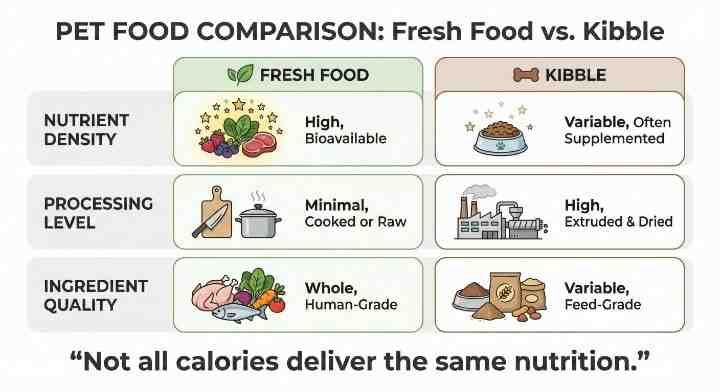
Comparing Nutritional Profiles: Fresh Dog Food vs. Kibble
• Quality of Ingredients
The most considerable distinction between fresh pet food and kibble lies in the quality of ingredients. Fresh food typically contains whole proteins, fresh vegetables, and healthy fats, all of which are minimally processed to retain their nutritional value.
Kibble, on the other hand, often contains a mixture of meat by-products, grains, and artificial additives, which may not offer the same nutritional quality as fresh, whole foods. These differences can impact your pet’s overall health, with fresh food offering a more nutrient-dense diet.
• Nutrient Retention
Fresh food maintains its nutritional integrity because it’s cooked at lower temperatures or even served raw. Many vitamins and minerals, such as vitamin C and B vitamins, are heat-sensitive and can be lost during the high-heat processing of kibble.
As a result, kibble may require the addition of synthetic nutrients to meet your pet’s dietary needs, whereas fresh food offers a more natural and nutrient-dense option. This means that pets consuming fresh pet food may experience better absorption of vitamins and minerals, leading to improved overall health.
• Customization of Diets
One of the key benefits of fresh pet food is the ability to customize the diet to suit your pet’s specific needs. Whether your pet has food sensitivities, allergies, or health conditions like kidney disease or obesity, fresh food can be tailored to meet those needs.
This level of customization is often harder to achieve with kibble, as most kibble products are mass-produced to cater to general nutritional requirements. For pets with unique dietary restrictions, fresh food can provide more precise and effective solutions.
Making the Switch: How to Transition from Kibble to Fresh Food
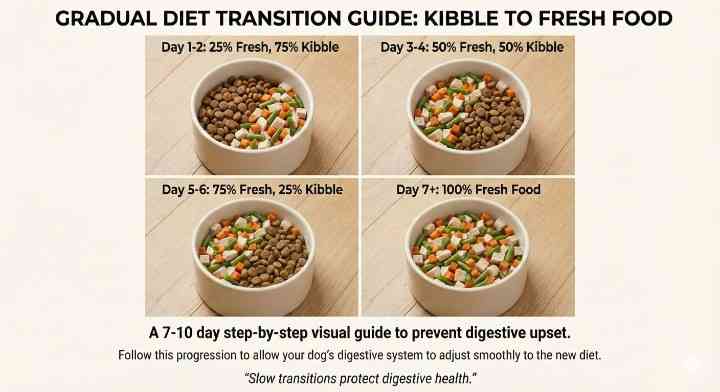
If you’ve decided to switch to fresh food for your pet, it’s important to make the transition gradually. A sudden change in diet can upset your pet’s digestive system and cause discomfort, leading to gastrointestinal issues.
Initially, combine a little portion of fresh food with their present kibble. Slowly, over a period of a few days, increase the amount of fresh food so that your pet’s digestive system can acclimatize. The majority of vets and pet nutrition specialists advise a time of transition of 7 to 10 days when changing your pet’s food to avoid any digestive upset.
If your pet happens to have any special health conditions, it definitely wouldn’t be a bad idea to get advice from a vet. A veterinarian can formulate a fresh, food diet that is most appropriate for your pet’s unique requirements. Just to illustrate, there are some pets that may require a more gradual introduction to fresh food, whereas others may become better quickly transitioning.
Comparison Table: Fresh Dog Food vs. Kibble
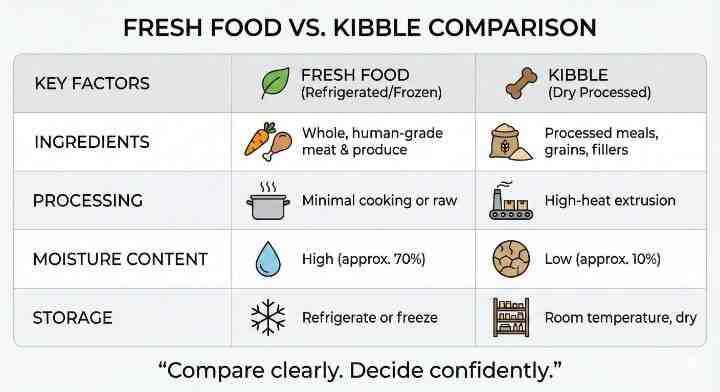
| Aspect | Fresh Food (Human-Grade Meals) | Kibble |
| Ingredients Quality | Whole, natural ingredients free from fillers, by-products, and artificial additives. | Often contains by-products, grains, fillers, and preservatives. |
| Nutrient Retention | Rich in natural nutrients; minimal heat processing to preserve vitamins and minerals. | Nutrients can be degraded due to high-temperature processing. |
| Digestibility | Easier for pets to digest due to natural enzymes and fewer fillers. | May cause digestive upset in some pets due to synthetic additives and low-quality ingredients. |
| Protein Source | High-quality, whole proteins like chicken, beef, and fish. | Protein often comes from meat meals or by-products that are lower in quality. |
| Customization for Health Needs | Can be tailored to individual pet needs (e.g., allergies, sensitivities, or weight management). | Limited customization options; mass-produced to cater to general nutritional needs. |
| Effect on Coat and Skin | Promotes a shiny coat, reduces itching and dryness due to omega-3 and omega-6 fatty acids. | May not provide the same level of coat and skin health due to lower-quality fats and additives. |
| Energy and Vitality | Provides sustained energy and vitality with nutrient-dense food. | Can lead to fluctuations in energy levels, especially in pets with sensitivities. |
| Long-term Health Benefits | Helps prevent chronic diseases like obesity, diabetes, and heart disease by supporting overall health. | Long-term consumption of low-quality kibble can contribute to obesity, poor dental health, and digestive problems. |
| Shelf Life and Storage | Requires refrigeration and has a shorter shelf life, though this can be a sign of fewer preservatives. | Long shelf life, easy to store, and requires no refrigeration. |
| Cost | Typically, it is more expensive due to higher-quality ingredients and fresh food preparation. | Generally, more affordable and budget-friendly. |
| Convenience | Requires preparation or purchasing from specialized services; less convenient than kibble. | Convenient, easy to store, and serve, requiring little to no preparation. |
Kibble Risks and Puppy Nutrition: A Veterinary Perspective

| Aspect | Explanation (Veterinary Insight) | Potential Impact on Puppies |
|---|---|---|
| Convenience | Kibble is easy to store, measure, and serve, making it practical for many households. | Encourages consistent feeding routines but may lead to overreliance without quality assessment. |
| Manufacturing Process | Most kibble is produced using high-temperature extrusion, which improves shelf life. | Heat processing can reduce the availability of certain amino acids, fatty acids, and B-complex vitamins. |
| Nutrient Loss | Heat-sensitive nutrients may be partially degraded during processing. | May affect optimal growth, immune development, and metabolic efficiency in puppies. |
| Synthetic Supplementation | Lost nutrients are often replaced with synthetic vitamins and minerals after processing. | Meets minimum nutritional standards but may be less bioavailable than nutrients from whole foods. |
| Ingredient Quality | Lower-quality kibbles may include fillers, excessive carbohydrates, and rendered meat meals. | Can contribute to poor digestion and reduced nutrient utilization. |
| Digestive Tolerance | Some puppies show sensitivity to certain kibble formulations. | Signs may include bloating, soft stools, gas, or intermittent diarrhea. |
| Breed Sensitivity | Puppies with sensitive gastrointestinal systems are more affected. | Digestive issues may occur more frequently in susceptible breeds. |
| Developmental Risk | Puppyhood is a critical growth phase requiring precise nutrition. | Inadequate nutrient quality may influence long-term gut health and development. |
Final Thoughts: Choosing the Right Diet for Your Pet
From a veterinary perspective, nutrition is one of the most effective means that is put forward to preventive healthcare in pets. However, the food remains a convenient and accessible option, but its limitations, especially with regards to the quality of ingredients and digestibility, should not be eased off.
When they are properly balanced, carefully sourced, and introduced under veterinary guidance, fresh, human, grade diets have the potential of being advantageous. Pets having digestive sensitivities, skin disorders, obesity, or particular growth needs may be the ones to benefit most from such diets.
It is also important to note that no diet is ideal for everyone. The best feeding decision is one that matches your pet’s age, breed, health condition, and lifestyle and one that you can carry out regularly and safely.
Definitely, a vet’s consultation before making a dietary change of a large scale will assure that nutrition is the main support not only for the beauty of the short, term but also for a healthy, mobile, and vibrant long, term life.
FAQs: Fresh Food vs. Kibble for Pets
Is human-grade food really necessary for pets?
Human-grade food offers higher-quality ingredients that are fresher and more nutrient-dense compared to kibble. While not absolutely necessary for every pet, it can be beneficial for pets with allergies, sensitivities, or specific health concerns.
Is it safe to combine fresh food with kibble for a pet?
Mixing fresh food with kibble is generally safe and often recommended during dietary transitions. Introduce fresh food gradually over 7–10 days to minimize digestive upset.
How do I know if fresh food is right for my pet?
Fresh food is ideal for pets with specific dietary needs, such as food allergies, digestive issues, or skin problems. If your pet has been struggling with these issues on kibble, fresh food may provide significant improvements in their overall health.
Is kibble still a good option for pets?
Kibble can still provide a balanced diet for most pets and is convenient, affordable, and easy to store. However, its quality varies, and some brands may not offer the same health benefits as fresh food options.
Does fresh food have a longer shelf life than kibble?
Fresh food typically has a shorter shelf life than kibble because it contains fewer preservatives. It needs to be stored in the fridge or freezer and used within a specific time frame.
Is fresh dog food better than kibble?
Fresh dog food may offer improved digestibility and ingredient quality compared to kibble, especially for pets with sensitivities. However, both options can be healthy if they are nutritionally balanced and appropriate for the pet’s age and health status.
What are the risks of feeding fresh food?
The main risks include nutritional imbalance, improper portioning, and inadequate mineral ratios—especially in puppies. These risks can be minimized by consulting a veterinarian or veterinary nutritionist.

Very useful