Discover 20 pairs of similar looking dog breeds explained in detail. Compare size, temperament, care, lifespan, and costs to avoid confusion.
Table of Contents
Introduction: Why So Many Dog Breeds Look Alike
Dog that look similar but are different are not usually easy to notice by dog lovers. Even the most experienced professionals are confused here since even they stop to identify the difference between two breeds that have common climatic conditions, uses, and breeding purposes.
This analogy of similar dog breeds can be used as a useful guide to breed confusion. It dissects visual similarity and identifies major differences size, temperament, purpose, health and needs of care. Arctic sled dogs to small companions, in every side-by-side comparison, we have discovered why the two breeds can seem completely the same first sight but behave so differently in the real world.
What Makes Dog Breeds Appear Similar
Several factors contribute to dogs looking alike:
- Shared ancestry and genetics
- Similar working roles, such as herding or guarding
- Environmental adaptation, especially climate
- Selective breeding for appearance
- Modern cross-influence between breed standards
According to historical breed documentation published by major kennel organizations, morphology consistently reflects purpose. That’s why sled dogs, livestock guardians, and retrievers often resemble one another across regions.
Group 1: Spitz-Type Look-Alike Dog Breeds (Cold-Climate & Fox-Faced Dogs)
1. Siberian Husky vs Alaskan Malamute: Speed vs Strength in Arctic Sled Dogs
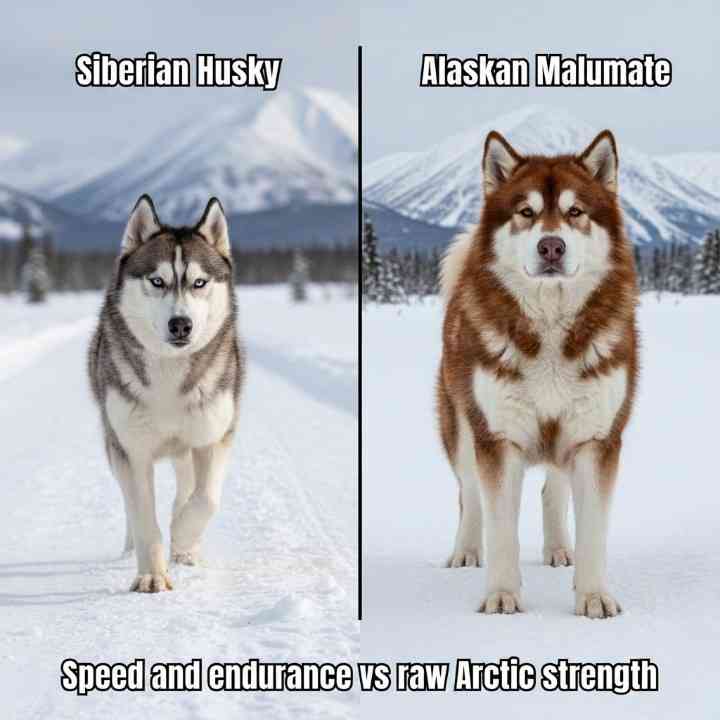
Among similar looking dog breeds, Husky and Malamute differ clearly.Huskies favor speed and endurance, while Malamutes emphasize raw strength and hauling power in Arctic sled work.
| Similar Feature | Siberian Husky | Alaskan Malamute | Why They Look Alike |
|---|---|---|---|
| Arctic Origin | Native to Siberia | Native to Alaska | Both evolved in extreme cold climates |
| Wolf-Like Appearance | Narrow wolf-like face | Broad wolf-like face | Shared spitz ancestry creates wolf resemblance |
| Double Coat | Thick undercoat + guard hair | Very dense undercoat + guard hair | Insulation against freezing temperatures |
| Erect Ears | Small, upright ears | Medium, upright ears | Prevents heat loss in cold environments |
| Plumed Tail | Bushy, curved tail | Large, fluffy tail | Used to cover face while sleeping in snow |
| Color Patterns | Black, gray, red, white | Gray, black, sable, white | Arctic camouflage colors |
| Facial Mask | Common facial markings | Common facial markings | Genetic coat pattern similarity |
| Sled Dog Heritage | Yes | Yes | Both bred for sled-pulling work |
2. Samoyed vs American Eskimo Dog
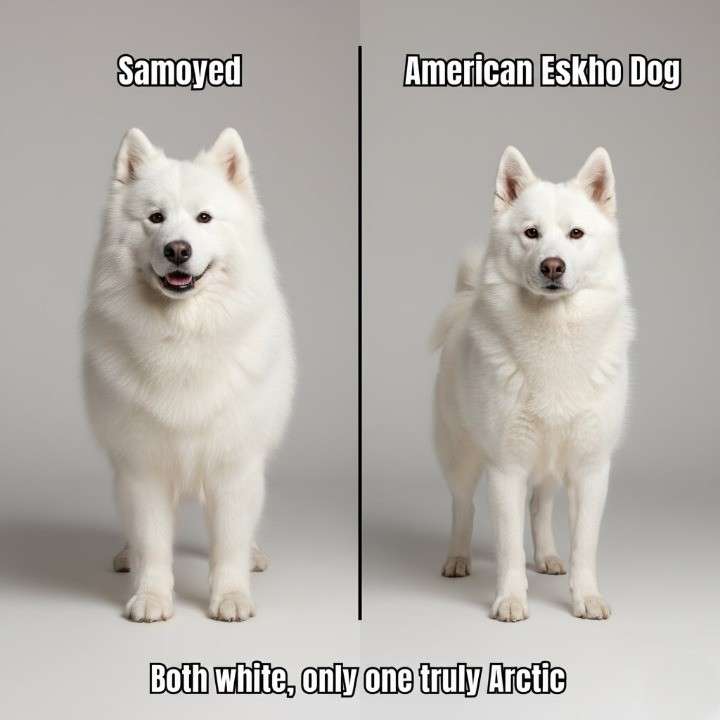
These are classic dog breeds that look alike, yet Samoyeds are larger and calmer, while American Eskimo Dogs are smaller, sharper, and more alert companions with higher reactivity.
| Point | Samoyed | American Eskimo Dog |
|---|---|---|
| Origin & History | Siberian sled and herding dog | European spitz, later refined in USA |
| Size & Weight | Large; 20–30 kg | Small–medium; 4–16 kg |
| Coat & Maintenance | Thick double coat; heavy shedding | Dense fluffy coat; regular brushing |
| Exercise & Energy | Moderate–high stamina | High playful energy |
| Temperament | Gentle, social, friendly | Alert, lively, intelligent |
| Main Reason of Similarity | White spitz coat and smiling face | Same spitz structure |
| Life Span | 12–14 years | 13–15 years |
| Approx. Cost (USD) | 1,200–2,500 | 800–2,000 |
| Easy Recognition | Large snow-white body | Smaller, compact white dog |
| Common Health Issues | Hip dysplasia, diabetes | Dental issues, patellar luxation |
3.Akita vs Shiba Inu: Guardian Power vs Fox-Like Independence
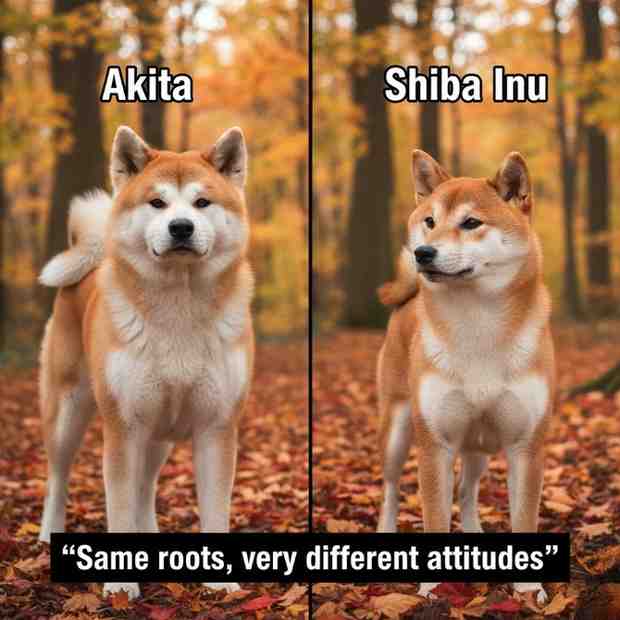
Frequently mentioned as dogs that look similar but are different, Akitas are powerful guardians, whereas Shiba Inus are compact, independent, and fox-like with bold, self-directed personalities.
| Point | Akita | Shiba Inu |
|---|---|---|
| Origin & History | Ancient Japanese guardian | Japanese hunting dog |
| Size & Weight | Large; 32–45 kg | Small; 8–11 kg |
| Coat & Maintenance | Thick double coat; seasonal shedding | Dense coat; moderate grooming |
| Exercise & Energy | Moderate | High and agile |
| Temperament | Calm, reserved, loyal | Bold, alert, independent |
| Main Reason of Similarity | Japanese spitz lineage | Same regional ancestry |
| Life Span | 10–13 years | 12–15 years |
| Approx. Cost (USD) | 1,500–3,000 | 1,200–2,500 |
| Easy Recognition | Bear-like size | Fox-like small frame |
| Common Health Issues | Hip dysplasia, thyroid issues | Allergies, patella issues |
4. Finnish Spitz vs Icelandic Sheepdog: Hunting Barkers vs Family Herders
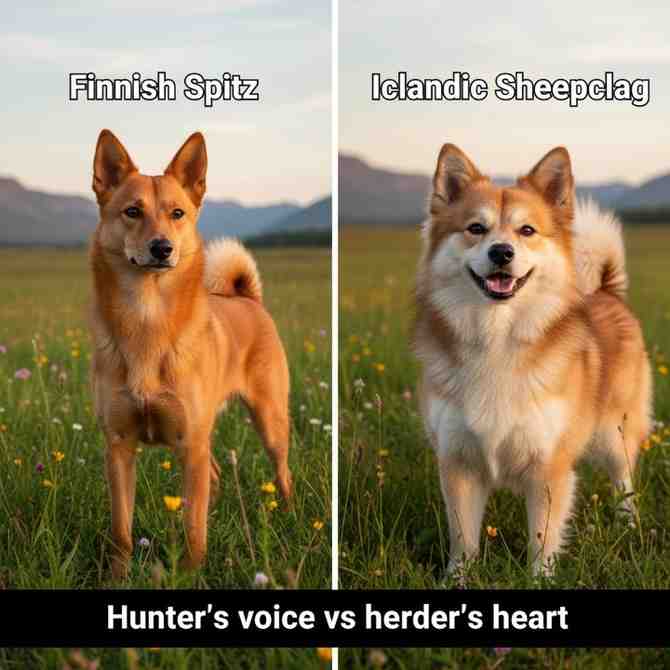
Among considered confusing dog breeds, Finnish Spitz excels as a vocal hunting dog, while Icelandic Sheepdogs are family-oriented herders known for friendliness and adaptability.
| Point | Finnish Spitz | Icelandic Sheepdog |
|---|---|---|
| Origin & History | Finnish hunting dog | Nordic herding dog |
| Size & Weight | Medium; 9–16 kg | Medium; 9–14 kg |
| Coat & Maintenance | Short-medium double coat | Longer, fluffy double coat |
| Exercise & Energy | High and active | Moderate–high |
| Temperament | Vocal, alert | Friendly, cheerful |
| Main Reason of Similarity | Fox-like spitz build | Nordic spitz body |
| Life Span | 12–14 years | 12–15 years |
| Approx. Cost (USD) | 1,200–2,000 | 1,500–2,500 |
| Easy Recognition | Sharper fox face | Softer fluffy outline |
| Common Health Issues | Hip issues, eye problems | Joint issues, allergies |
5. Keeshond vs German Spitz: Companion Watchdogs Compared
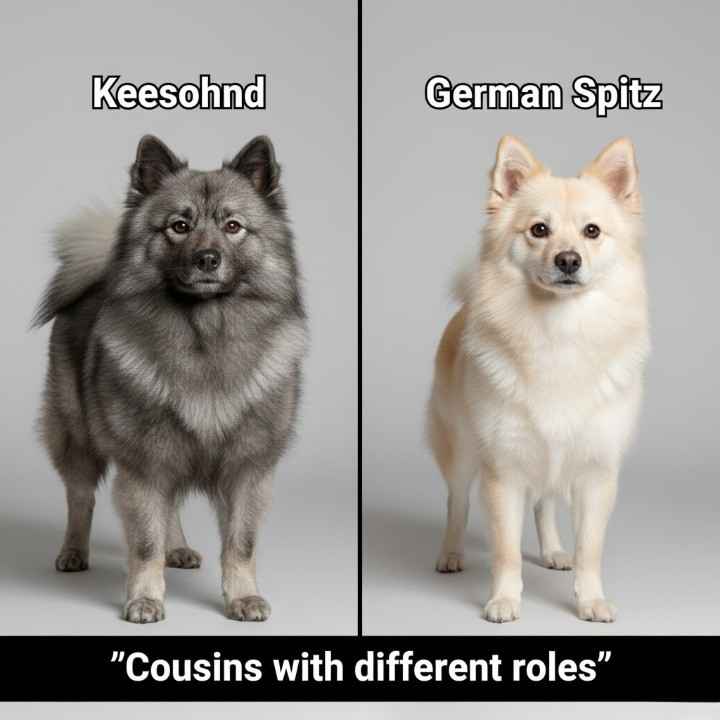
Grouped among similar looking dog breeds, Keeshonds are affectionate companions, while German Spitz types vary in size and serve more as alert, traditional watchdogs.
| Point | Keeshond | German Spitz |
|---|---|---|
| Origin & History | Dutch barge watchdog | German spitz lineage |
| Size & Weight | Medium; 14–18 kg | Small–medium; 5–15 kg |
| Coat & Maintenance | Very dense coat; frequent brushing | Thick coat; moderate care |
| Exercise & Energy | Moderate | Moderate–high |
| Temperament | Affectionate, social | Alert, watchful |
| Main Reason of Similarity | Spitz coat and face | Same ancestral line |
| Life Span | 12–15 years | 13–16 years |
| Approx. Cost (USD) | 1,000–2,000 | 800–2,000 |
| Easy Recognition | “Spectacle” eyes | Solid bright colors |
| Common Health Issues | Hip dysplasia | Dental, eye issues |
Group 2: Retriever & Gun Dog Look-Alikes (Sporting & Family Dogs)
6. Labrador Retriever vs Golden Retriever: Coat Type, Energy & Family Fit
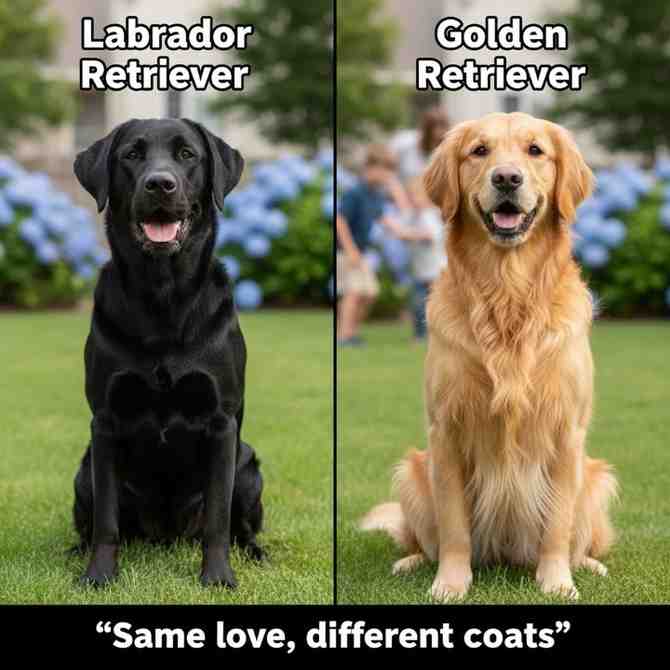
These dog breeds that look alike differ in coat and temperament.Labradors are energetic and food-driven, while Goldens are softer-natured, people-focused, and emotionally expressive.
| Point | Labrador | Golden Retriever |
|---|---|---|
| Origin & History | Canadian water retriever | Scottish hunting retriever |
| Size & Weight | Medium–large; 25–36 kg | Large; 27–34 kg |
| Coat & Maintenance | Short coat; low grooming | Long coat; high grooming |
| Exercise & Energy | High | High |
| Temperament | Friendly, outgoing | Gentle, affectionate |
| Main Reason of Similarity | Same retriever role | Similar working purpose |
| Life Span | 10–12 years | 10–12 years |
| Approx. Cost (USD) | 800–2,000 | 1,000–2,500 |
| Easy Recognition | Short sleek coat | Feathered long coat |
| Common Health Issues | Obesity, hip dysplasia | Cancer, joint problems |
7. Flat-Coated Retriever vs Golden Retriever: Youthful Energy vs Gentle Calm
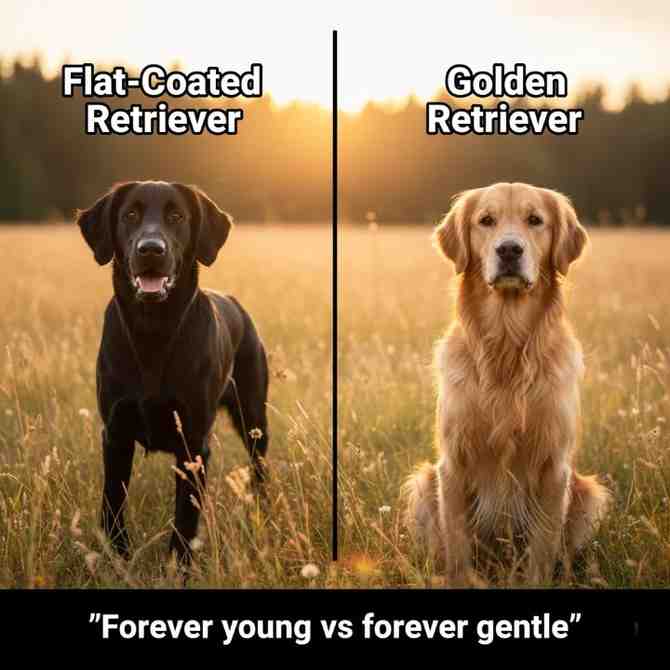
Often seen as dogs that look similar but are different, Flat-Coated Retrievers mature slowly with playful intensity, while Golden Retrievers show calmer, steadier family behavior.
| Point | Flat-Coated Retriever | Golden Retriever |
|---|---|---|
| Origin & History | British game retriever | Scottish retriever |
| Size & Weight | Large; 27–36 kg | Large; 27–34 kg |
| Coat & Maintenance | Long, smooth; moderate grooming | Long, feathered; high grooming |
| Exercise & Energy | Very high | High |
| Temperament | Playful, youthful | Calm, friendly |
| Main Reason of Similarity | Retriever body and movement | Same hunting role |
| Life Span | 8–10 years | 10–12 years |
| Approx. Cost (USD) | 1,200–2,500 | 1,000–2,500 |
| Easy Recognition | Black or liver coat | Golden shades |
| Common Health Issues | Cancer risk | Cancer, hip dysplasia |
8. Chesapeake Bay Retriever vs Labrador Retriever: Rugged Worker vs Social Star
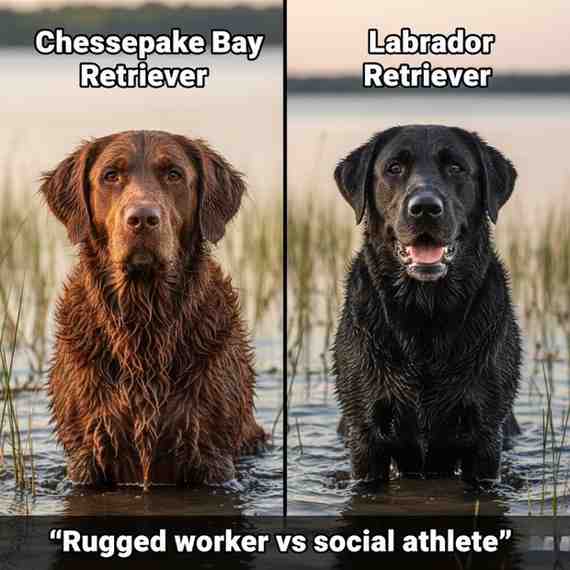
Among confusing dog breeds, Chessies are rugged and independent workers, while Labradors are sociable, adaptable, and widely suited for family and service roles.
| Point | Chesapeake Bay | Labrador |
|---|---|---|
| Origin & History | American water retriever | Canadian retriever |
| Size & Weight | 25–36 kg | 25–36 kg |
| Coat & Maintenance | Oily, wavy coat | Smooth short coat |
| Exercise & Energy | High | High |
| Temperament | Protective, loyal | Friendly, social |
| Main Reason of Similarity | Water retrieving role | Same function |
| Life Span | 10–13 years | 10–12 years |
| Approx. Cost (USD) | 1,200–2,500 | 800–2,000 |
| Easy Recognition | Curly waterproof coat | Plain short coat |
| Common Health Issues | Joint disorders | Obesity, hips |
9.Nova Scotia Duck Tolling Retriever vs Golden Retriever: Intensity vs Balance
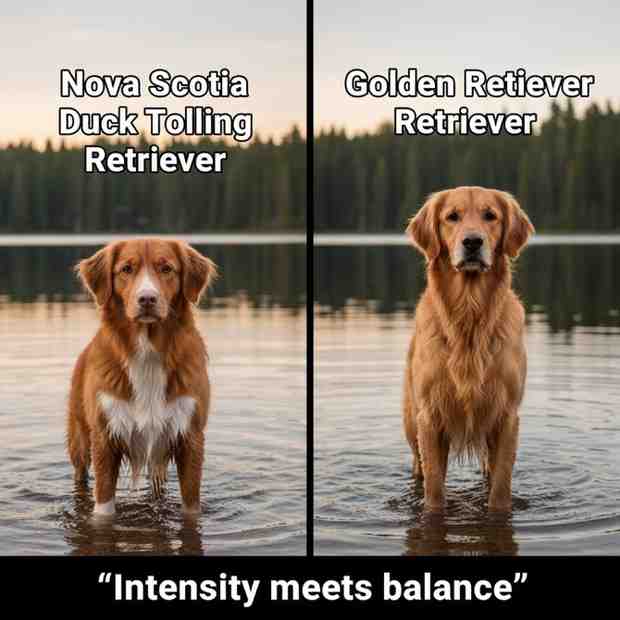
Classed as similar looking dog breeds, Tollers are intense, vocal, and driven, whereas Goldens balance moderate energy with consistent calm and emotional sensitivity.
| Point | Toller | Golden |
|---|---|---|
| Origin & History | Canadian hunting dog | Scottish retriever |
| Size & Weight | Medium; 17–23 kg | Large; 27–34 kg |
| Coat & Maintenance | Medium coat; moderate care | Long coat; high care |
| Exercise & Energy | Very high | High |
| Temperament | Intense, smart | Calm, friendly |
| Main Reason of Similarity | Retriever behavior | Same sporting group |
| Life Span | 12–14 years | 10–12 years |
| Approx. Cost (USD) | 1,500–3,000 | 1,000–2,500 |
| Easy Recognition | Red coat, white tail tip | Solid golden |
| Common Health Issues | Autoimmune issues | Cancer |
Group 3: Shepherd & Working Dog Look-Alikes (High-Drive & Guard Dogs)
10.German Shepherd vs Belgian Malinois: Power Patrol vs Tactical Athlete
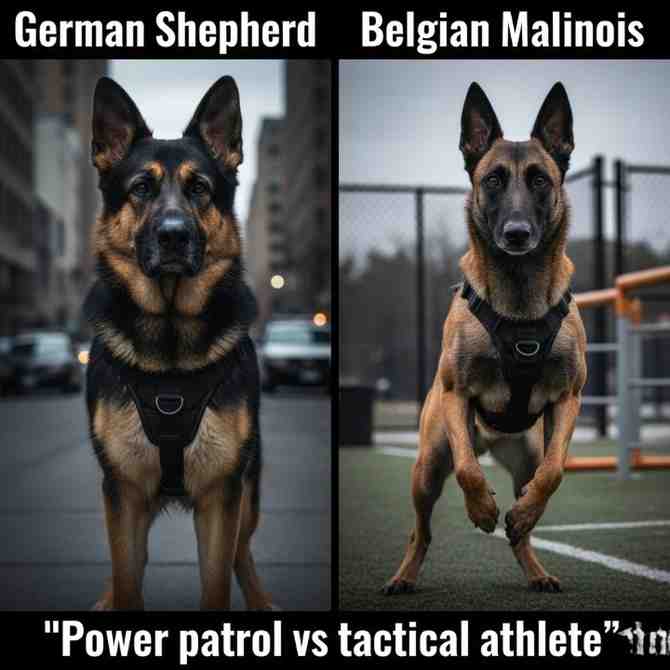
These dog breeds that look alike differ sharply—German Shepherds balance versatility and stability, while Belgian Malinois are high-drive tactical athletes demanding advanced handling.
| Point | German Shepherd | Belgian Malinois |
|---|---|---|
| Origin & History | German herding dog | Belgian working dog |
| Size & Weight | 30–40 kg | 25–30 kg |
| Coat & Maintenance | Medium double coat | Short tight coat |
| Exercise & Energy | High | Extremely high |
| Temperament | Loyal, protective | Intense, driven |
| Main Reason of Similarity | Shepherd lineage | Same herding roots |
| Life Span | 9–13 years | 12–14 years |
| Approx. Cost (USD) | 800–2,000 | 1,200–3,000 |
| Easy Recognition | Sloped back | Lean straight frame |
| Common Health Issues | Hip dysplasia | Joint strain |
11. White Swiss Shepherd vs German Shepherd: Companion Shepherd vs Protector
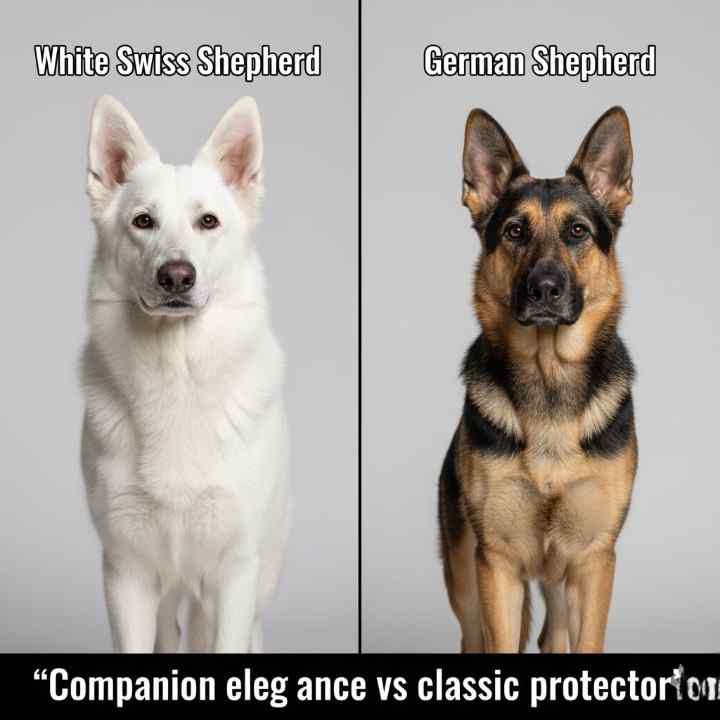
Commonly labeled dogs that look similar but are different, White Swiss Shepherds emphasize companionship and softer temperament, while German Shepherds retain stronger protective instincts.
| Point | White Swiss | German Shepherd |
|---|---|---|
| Origin & History | White-coated shepherd | Original shepherd line |
| Size & Weight | 30–40 kg | 30–40 kg |
| Coat & Maintenance | Dense white coat | Mixed-color coat |
| Exercise & Energy | High | High |
| Temperament | Gentle, calm | Protective |
| Main Reason of Similarity | Same genetic base | Same breed origin |
| Life Span | 11–14 years | 9–13 years |
| Approx. Cost (USD) | 1,500–3,000 | 800–2,000 |
| Easy Recognition | Pure white color | Saddle markings |
| Common Health Issues | Hip issues | Hip issues |
12. Dutch Shepherd vs Belgian Malinois: Brindle Balance vs Extreme Drive
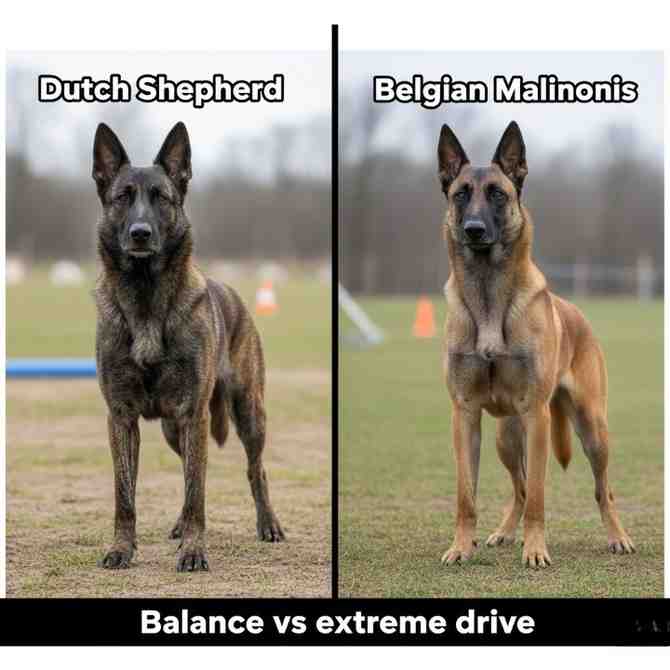
Considered confusing dog breeds, Dutch Shepherds show balanced drives and adaptability, whereas Malinois exhibit extreme intensity, speed, and precision-focused working ability.
| Point | Dutch Shepherd | Belgian Malinois |
|---|---|---|
| Origin & History | Netherlands herding dog | Belgian working shepherd |
| Size & Weight | Medium–large; 28–35 kg | Medium; 25–30 kg |
| Coat Type & Maintenance | Short/brindle coat; low grooming | Short dense coat; low grooming |
| Exercise & Energy Level | Very high | Extremely high |
| Temperament & Behaviour | Balanced, adaptable | Intense, highly driven |
| Main Reason of Similarity | Similar shepherd frame | Shared herding ancestry |
| Life Span | 11–14 years | 12–14 years |
| Approx. Cost (USD) | 1,000–2,500 | 1,200–3,000 |
| How to Recognise Easily | Brindle striping | Solid fawn with black mask |
| Common Health Issues | Hip dysplasia | Joint stress, overuse injuries |
13. Belgian Tervuren vs Belgian Malinois: Elegance vs Operational Focus
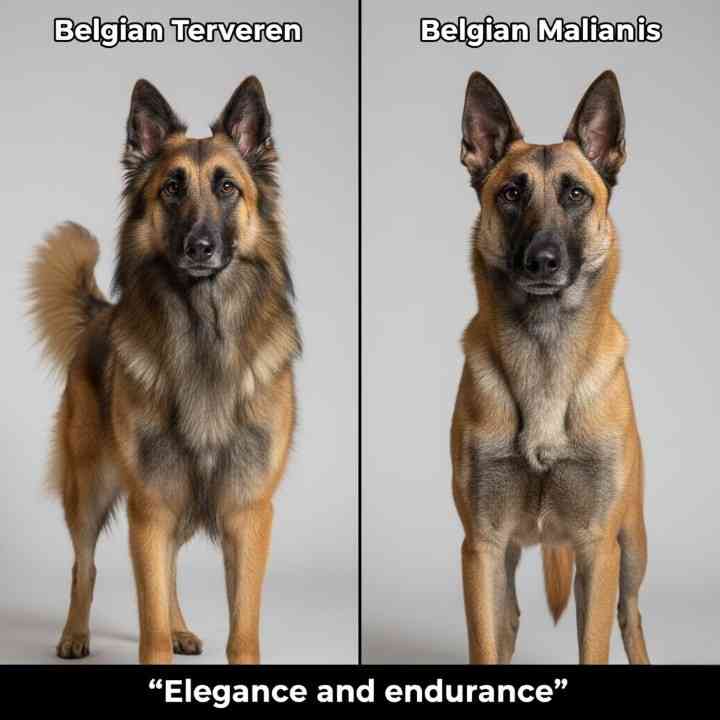
Grouped among similar looking dog breeds, Tervurens display elegance and longer coats, while Malinois prioritize operational focus, drive, and working efficiency.
| Point | Belgian Tervuren | Belgian Malinois |
|---|---|---|
| Origin & History | Belgian herding variety | Belgian working line |
| Size & Weight | Medium–large; 25–30 kg | Medium; 25–30 kg |
| Coat Type & Maintenance | Long, flowing coat; high grooming | Short coat; minimal grooming |
| Exercise & Energy Level | High | Extremely high |
| Temperament & Behaviour | Intelligent, elegant | Intense, tactical |
| Main Reason of Similarity | Same Belgian shepherd family | Same genetic group |
| Life Span | 12–14 years | 12–14 years |
| Approx. Cost (USD) | 1,500–3,000 | 1,200–3,000 |
| How to Recognise Easily | Long coat | Short tight coat |
| Common Health Issues | Hip dysplasia | Muscle strain |
Group 4: Mastiff & Guardian Breed Look-Alikes (Powerful Protection Dogs)
14. Cane Corso vs Neapolitan Mastiff: Athletic Guardian vs Wrinkled Giant
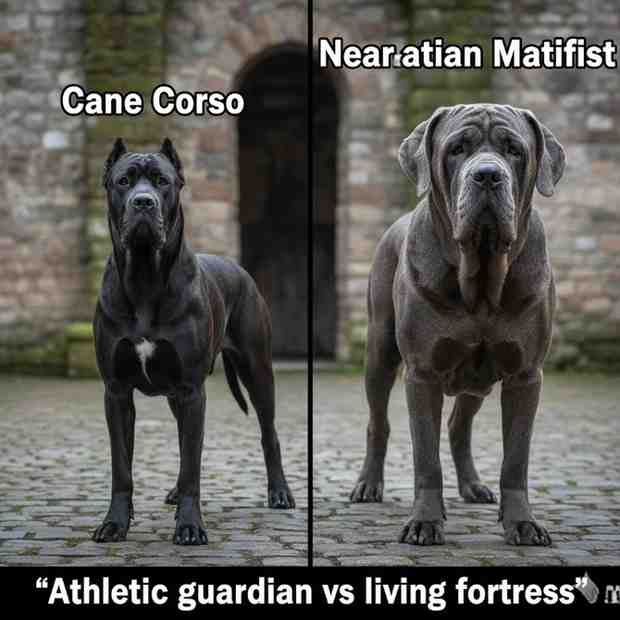
These dog breeds that look alike contrast strongly—Cane Corsos are athletic protectors, while Neapolitan Mastiffs are massive, slower, and defined by heavy wrinkles and intimidation.
| Point | Cane Corso | Neapolitan Mastiff |
|---|---|---|
| Origin & History | Italian guardian mastiff | Ancient Roman mastiff |
| Size & Weight | Large; 40–50 kg | Giant; 50–70 kg |
| Coat Type & Maintenance | Short coat; low grooming | Short coat; skin care needed |
| Exercise & Energy Level | Moderate–high | Low–moderate |
| Temperament & Behaviour | Confident, alert | Calm, protective |
| Main Reason of Similarity | Italian mastiff heritage | Same regional roots |
| Life Span | 9–12 years | 7–9 years |
| Approx. Cost (USD) | 1,500–4,000 | 1,500–3,500 |
| How to Recognise Easily | Tight skin, athletic body | Heavy wrinkles and folds |
| Common Health Issues | Hip dysplasia | Skin infections, joints |
15. Bullmastiff vs Boerboel: Compact Strength vs Massive Authority
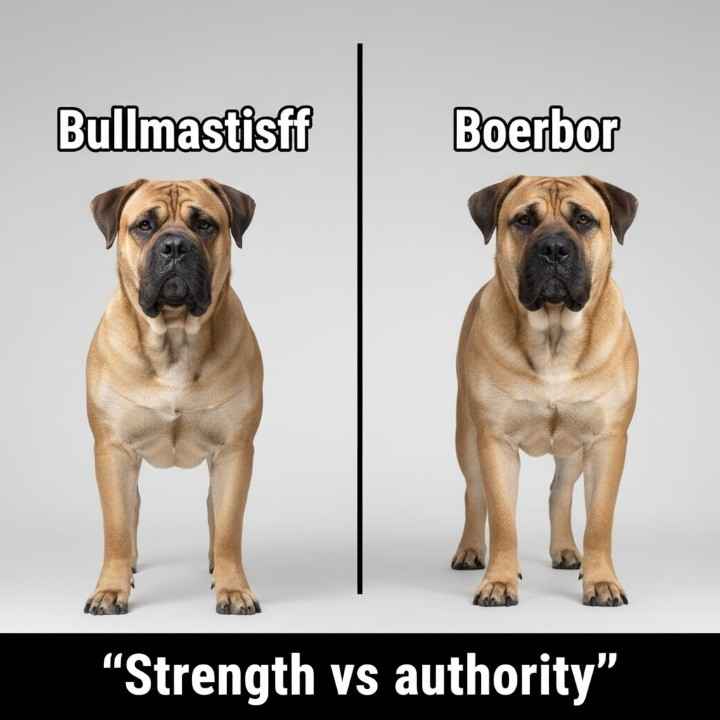
Commonly described as dogs that look similar but are different, Bullmastiffs are compact guardians, while Boerboels are larger, dominant, and bred for serious territorial defense
| Point | Bullmastiff | Boerboel |
|---|---|---|
| Origin & History | British estate guard | South African farm guardian |
| Size & Weight | Large; 45–60 kg | Very large; 60–80 kg |
| Coat Type & Maintenance | Short coat; low grooming | Short coat; low grooming |
| Exercise & Energy Level | Moderate | Moderate |
| Temperament & Behaviour | Calm, reliable | Confident, dominant |
| Main Reason of Similarity | Mastiff body type | Same guardian role |
| Life Span | 7–9 years | 9–11 years |
| Approx. Cost (USD) | 1,200–2,500 | 1,500–3,000 |
| How to Recognise Easily | Shorter and broader | Taller and heavier |
| Common Health Issues | Joint problems | Heart and joint issues |
16. Tibetan Mastiff vs Caucasian Shepherd: Lion-Maned vs Bear-Built Guardians
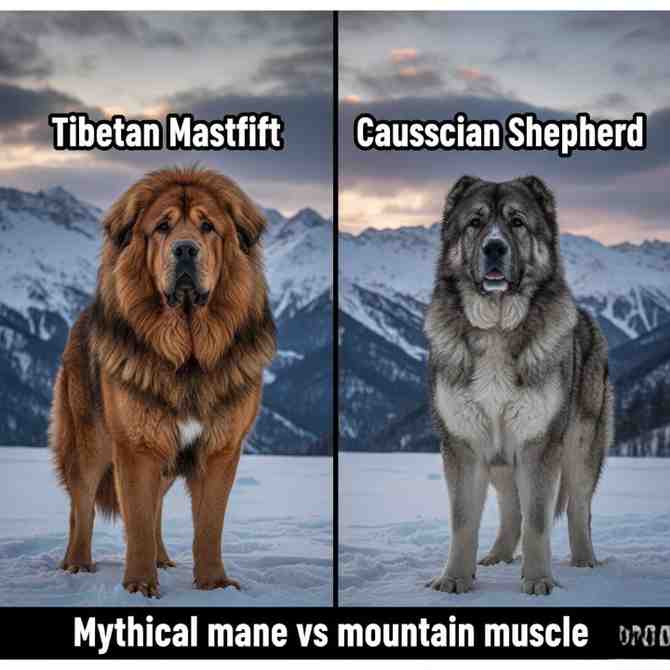
Among the most confusing dog breeds, Tibetan Mastiffs appear lion-like and reserved, while Caucasian Shepherds are bear-built, highly assertive, and intensely territorial.
| Point | Tibetan Mastiff | Caucasian Shepherd |
|---|---|---|
| Origin & History | Himalayan livestock guardian | Eastern European guardian |
| Size & Weight | Giant; 45–72 kg | Giant; 50–90 kg |
| Coat Type & Maintenance | Thick mane-like coat | Extremely dense coat |
| Exercise & Energy Level | Moderate | Low–moderate |
| Temperament & Behaviour | Aloof, independent | Dominant, territorial |
| Main Reason of Similarity | Mountain guardian role | Same working purpose |
| Life Span | 10–12 years | 10–12 years |
| Approx. Cost (USD) | 2,000–6,000 | 1,500–4,000 |
| How to Recognise Easily | Lion-like mane | Bear-like bulk |
| Common Health Issues | Hip dysplasia | Joint and heart issues |
Group 5: Small & Companion Dog Look-Alikes (Toy & Lap Dogs)
17. Maltese vs Bichon Frise: Silky Elegance vs Curly Cheerfulness
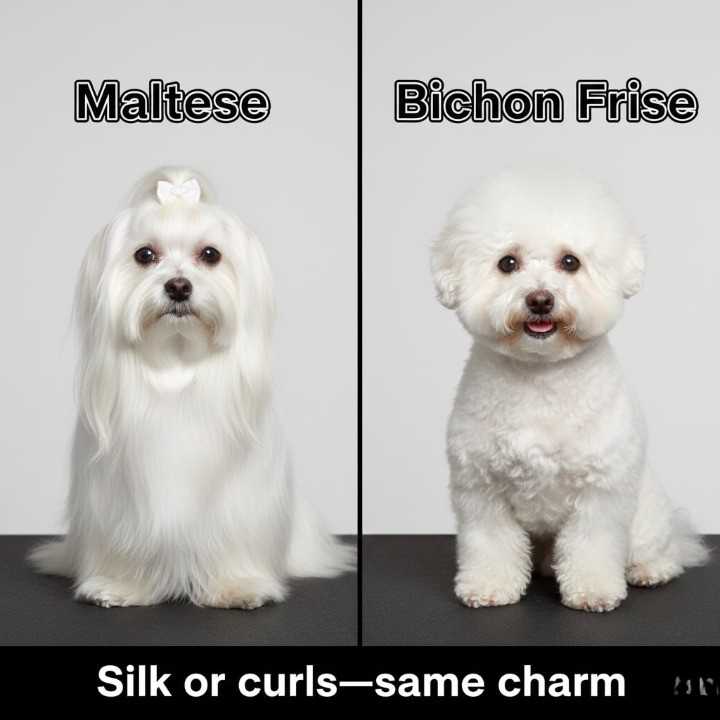
Maltese and Bichon Frise are confusing dog breeds—one known for silky elegance and refined grace, the other for curly cheerfulness, playful energy, and a fluffy, joyful personality in compact companion dogs.
| Point | Maltese | Bichon Frise |
|---|---|---|
| Origin & History | Mediterranean companion | French companion breed |
| Size & Weight | Small; 3–4 kg | Small; 5–8 kg |
| Coat Type & Maintenance | Long straight coat; high grooming | Curly coat; regular trimming |
| Exercise & Energy Level | Moderate | Moderate |
| Temperament & Behaviour | Gentle, affectionate | Cheerful, playful |
| Main Reason of Similarity | Toy companion role | Same size group |
| Life Span | 12–15 years | 12–15 years |
| Approx. Cost (USD) | 1,000–2,500 | 1,200–3,000 |
| How to Recognise Easily | Silky straight hair | Curly cloud-like coat |
| Common Health Issues | Dental problems | Allergies |
18. Papillon vs Long-Haired Chihuahua: Butterfly Ears vs Apple Head
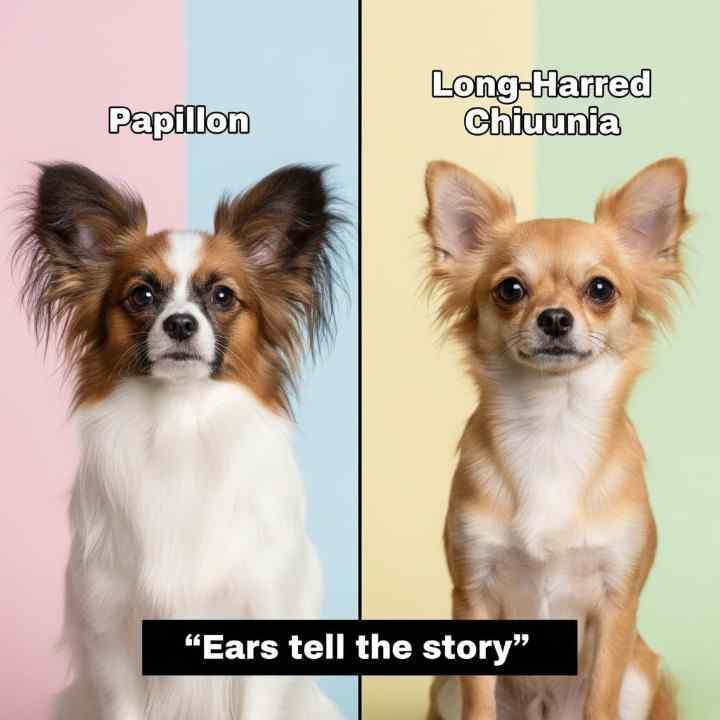
Papillon and Long-Haired Chihuahua are dog breeds that look alike, yet differ in charm.Papillon flaunts butterfly-like ears and agility, while the Chihuahua’s apple head highlights bold attitude and tiny confidence.
| Point | Papillon | Long-Haired Chihuahua |
|---|---|---|
| Origin & History | European toy breed | Mexican toy breed |
| Size & Weight | Small; 3–5 kg | Very small; 2–3 kg |
| Coat Type & Maintenance | Fine silky coat | Long soft coat |
| Exercise & Energy Level | High for size | Moderate |
| Temperament & Behaviour | Alert, intelligent | Bold, loyal |
| Main Reason of Similarity | Toy size and feathering | Same companion niche |
| Life Span | 14–16 years | 14–16 years |
| Approx. Cost (USD) | 1,200–2,500 | 800–2,000 |
| How to Recognise Easily | Butterfly ears | Apple-shaped head |
| Common Health Issues | Dental issues | Patellar luxation |
19. Pomeranian vs German Spitz: Miniature Fluff vs Traditional Spitz
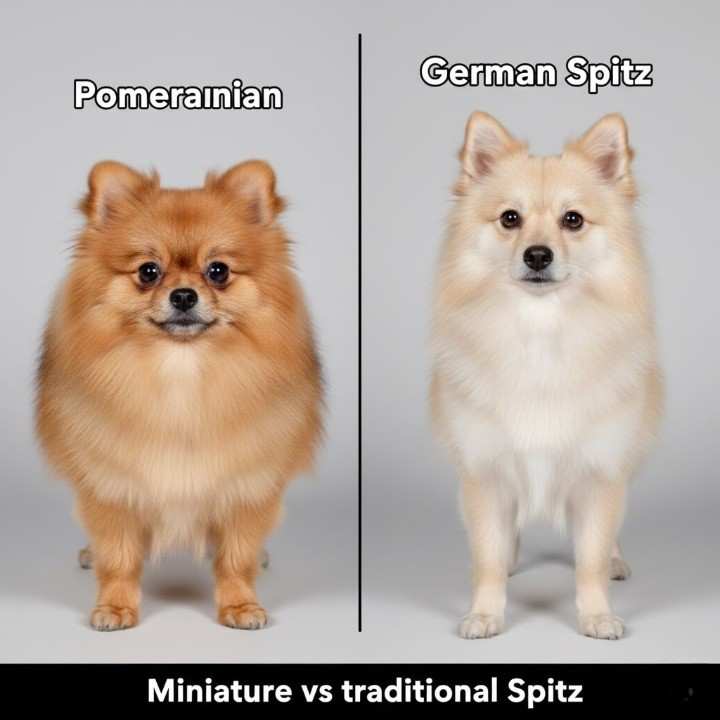
Widely considered to be dogs that look similar but are different, Pomeranians are toy-sized companions, while German Spitz varieties retain more traditional size and watchdog traits.
| Point | Pomeranian | German Spitz |
|---|---|---|
| Origin & History | Miniaturized spitz | Traditional spitz breed |
| Size & Weight | Toy; 2–3 kg | Small–medium; 5–15 kg |
| Coat Type & Maintenance | Very dense coat; frequent brushing | Thick coat; moderate care |
| Exercise & Energy Level | Moderate | Moderate |
| Temperament & Behaviour | Bold, lively | Alert, watchful |
| Main Reason of Similarity | Same spitz lineage | Shared ancestry |
| Life Span | 12–16 years | 13–16 years |
| Approx. Cost (USD) | 1,000–3,000 | 800–2,000 |
| How to Recognise Easily | Extremely small fluff | Taller frame |
| Common Health Issues | Tracheal collapse | Dental problems |
20. Havanese vs Coton de Tulear: Silky Companion vs Cotton-Coated Calm
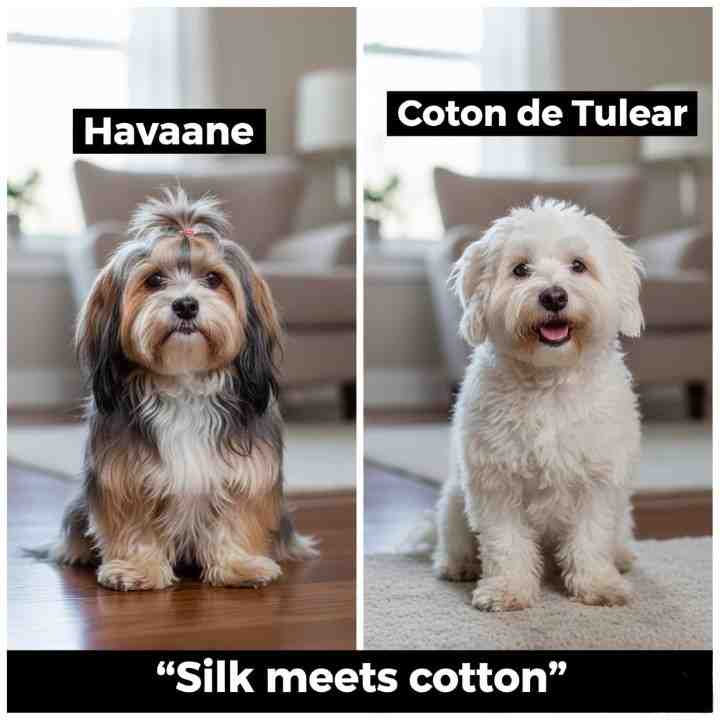
Sometimes viewed as confusing dog breeds, Havanese are lively and expressive, whereas Cotons are calmer, cotton-coated companions prized for relaxed affection.
| Point | Havanese | Coton de Tulear |
|---|---|---|
| Origin & History | Cuban companion dog | Madagascar companion breed |
| Size & Weight | Small; 4–7 kg | Small; 4–6 kg |
| Coat Type & Maintenance | Long silky coat | Cotton-textured coat |
| Exercise & Energy Level | Moderate | Moderate |
| Temperament & Behaviour | Social, outgoing | Calm, affectionate |
| Main Reason of Similarity | Similar size and structure | Same companion role |
| Life Span | 14–16 years | 15–18 years |
| Approx. Cost (USD) | 1,200–2,500 | 2,000–4,000 |
| How to Recognise Easily | Silky flowing coat | Cotton-like texture |
| Common Health Issues | Hip dysplasia | Eye issues |
Final Thoughts
Similar looking dog breeds often share physical traits but differ greatly in temperament, care, and suitability. Understanding these differences helps owners avoid confusion, make informed choices, and confidently identify confusing dog breeds beyond appearance alone.
FAQs: Similar Looking Dog Breeds
Why do some dog breeds look so similar?
Many breeds share common ancestors, working roles, or were selectively bred for similar physical traits like coat type, size, or head shape.
Are similar looking dog breeds actually related?
Some are closely related genetically, while others only look alike due to convergent breeding for similar functions or climates.
Can similar looking dog breeds have different temperaments?
Yes. Appearance can be misleading—energy levels, trainability, and behavior may differ significantly between look-alike breeds.
Do similar looking breeds require the same care?
Not always. Grooming, exercise, and health needs can vary despite similar coats or body structures.
Why are similar looking dog breeds often confused by owners?
Shared physical traits such as coat color, ear shape, and size make visual identification difficult without breed knowledge.
Are similar looking breeds equally suitable for families?
No. Some may be highly social and family-oriented, while others are more independent or require experienced handling.
Can DNA tests accurately identify similar looking dog breeds?
Yes. Canine DNA tests are the most reliable way to distinguish visually similar breeds and mixed ancestry
Do similar looking breeds have the same health risks?
They may share some risks, but breed-specific genetic issues can differ significantly.
Is size the best way to tell similar looking breeds apart?
Size helps, but factors like coat texture, tail carriage, facial structure, and behavior are also important.
How can I choose between two similar looking dog breeds?
Base your decision on lifestyle compatibility, temperament, grooming needs, and activity level—not appearance alone.

VERY INFORMATIVE